To flush a tank water heater, turn off its power or gas, shut the cold-water inlet, connect a garden hose to the drain valve near the bottom, open a hot tap in the house, and let the tank drain until the water runs clear, then refill it before you turn the heat back on. Sediment settles on the tank floor and can coat a heating element, which reduces heating and can shorten life. The job takes about an hour of attention plus draining time. This page is part of water heater repair and replacement, and the Stockton plumbing home page lists other jobs.
Do you need to flush your water heater?
Most manufacturers say yes, once a year at least. Rheem recommends an annual flush, and A. O. Smith's manual says to repeat it at least annually, or more often depending on how hard your water is. Sediment is mineral and rust that settles out of the water, and it builds faster in hard water. Check your owner's manual, because the maker's interval for your model is the one that counts.
Hardness depends on which supplier serves your home. Stockton homes are served by more than one supplier, and each publishes an annual water quality report, such as the Cal Water Stockton district report. Look at the hardness figure there, or ask your supplier.
Signs sediment is building: rumbling or popping when it heats, slower heating, less hot water and cloudy or gritty hot water. A tank that has never been flushed can also drain slowly, because sediment blocks the drain valve.
How do you flush a hot water heater with a garden hose?
Follow your manual first, then use these steps, adapted from the Pacific Northwest National Laboratory's Building America guide. Wear closed shoes: the water leaving the tank is hot. You need a garden hose, a flat-head screwdriver if the drain valve needs one, and rags.
- Turn off the power at the breaker (electric) or follow the manual to turn off the gas. Never run an empty or partly empty heater.
- Close the cold-water inlet valve on top of the heater. If there is none, shut off the water to the house.
- Open a hot-water tap, ideally one higher than the heater, so air can enter as the tank drains.
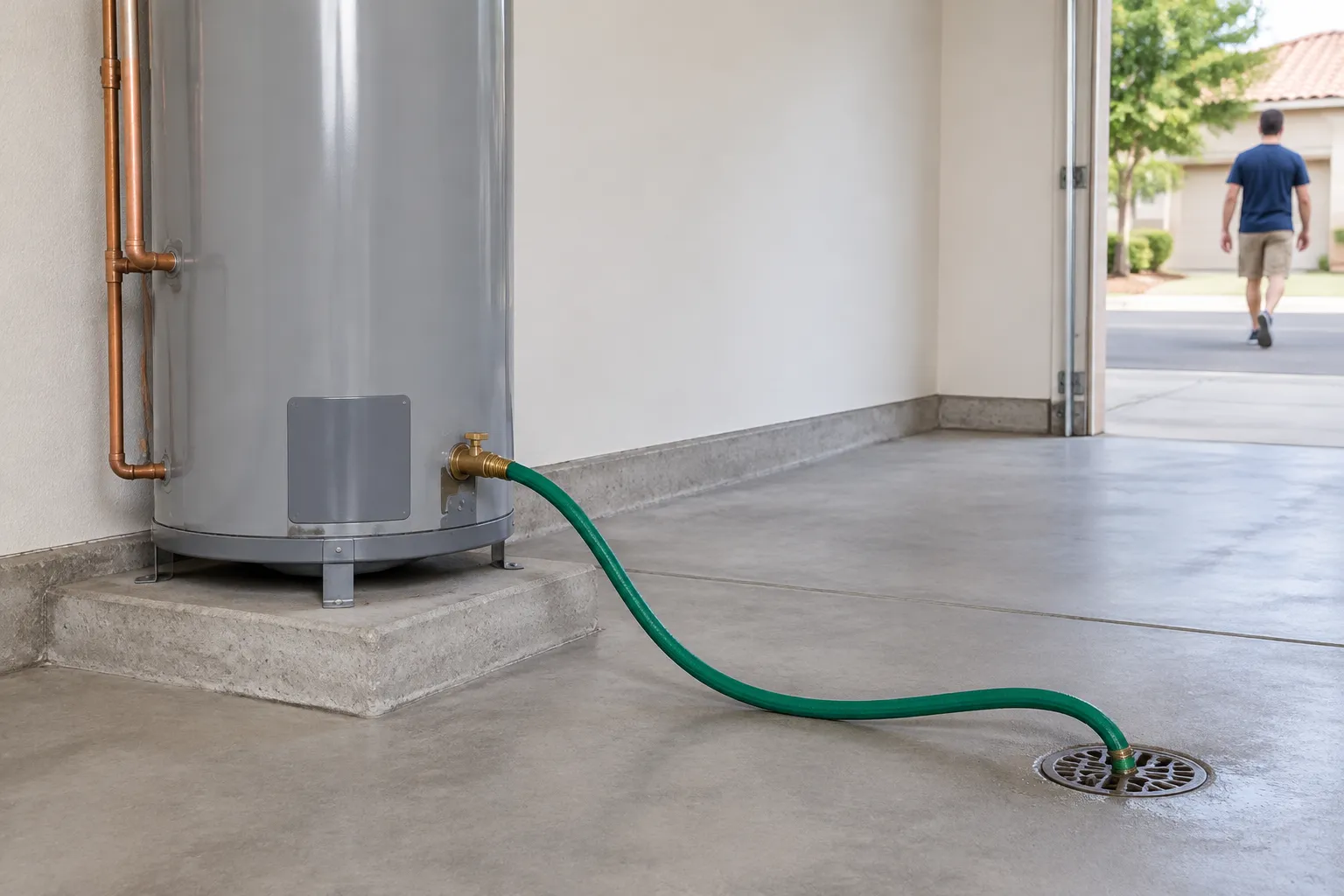
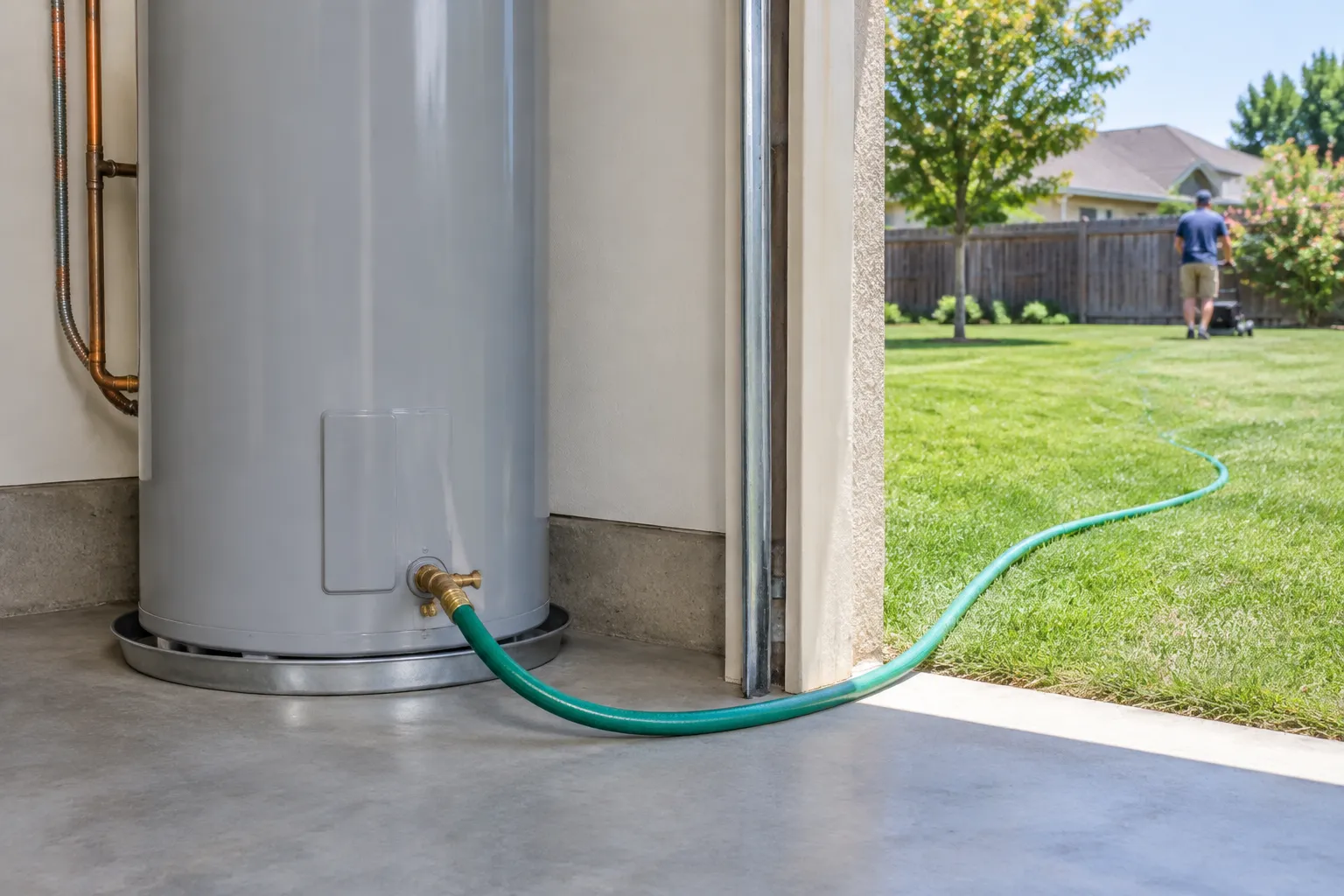
- Connect the hose to the drain valve at the bottom. Run the hose outside or to a floor drain that ends lower than the tank bottom.
- Open the drain valve and let the tank empty. After 20 minutes or more, open the cold inlet for about ten seconds to stir the sediment, then close it. Repeat as needed.
- Close the hot tap, then with the drain still open, open the cold inlet until the water runs clear.
- Close the drain valve, remove the hose, and let the tank refill. The tap will sputter as air escapes. Close it once the flow is smooth.
- Restore power or gas. For gas, follow the manufacturer's relighting steps so you do not blow out the pilot.
Wait several hours before doing laundry, because the water can be cloudy and take time to reheat.
What if the drain valve won't open, leaks or clogs?
Stop and call a plumber. Older heaters often have a plastic drain valve that can crack or stick shut, and forcing it can cause a leak you then cannot stop. If the hose runs but only a trickle comes out, sediment is likely blocking the valve. A plumber can clear it, or replace the valve, with the right tools.
Also stop and call if you find rust around the base, a puddle that was not there before, or a tank that is leaking from its body. Those mean the tank has a bigger problem, and flushing will not fix it. See what a leaking water heater means and what to do if sediment keeps coming back.
How do you reset a hot water heater?
Check the manual, because models differ. Many electric tanks have a high-limit reset button behind an access panel, but that panel sits near live wiring, so turn off the breaker before you open it. Gas tanks have a control knob and a pilot or igniter procedure printed on the unit. If a reset works once and the problem returns, do not keep resetting. Something is wrong, and a plumber should look at it.
A tripped breaker, a dead element or a safety shutoff are different faults with different fixes, and a reset does nothing for a tank that is simply old. For the price ranges on those repairs, see the water heater cost page.
Is it cheaper to fix a water heater or replace it?
It depends on the age and the fault. Rheem suggests replacing when a repair costs more than about half the price of a new unit, or the unit needs repeated repairs, and repairing when it is under roughly 6 to 8 years old without tank corrosion. It also puts tank heater life at 8 to 12 years on average.
A flush helps most on a young or middle-aged heater. It will not rescue a tank that is already leaking or corroded through. If yours is more than 10 years old and has never been flushed, a plumber may suggest checking the drain valve and the anode rod before you flush, since a stuck valve or heavy buildup can turn a flush into a leak. See anode rod replacement for that part, and electric vs gas water heaters if you are weighing a replacement.
How much does it cost to have a plumber flush a water heater?
This page gives no figure, because no reliable published price for a plumber's tank flush turned up. It is a short visit, often bundled with an inspection, and the price depends on the unit, access, the plumber's minimum charge and whether a stuck valve needs replacing. Ask for the flush price and any trip fee in writing, and for tankless units read about the tankless water heater flush, which is a different process.
To ask local plumbing businesses for quotes, use the quote page.