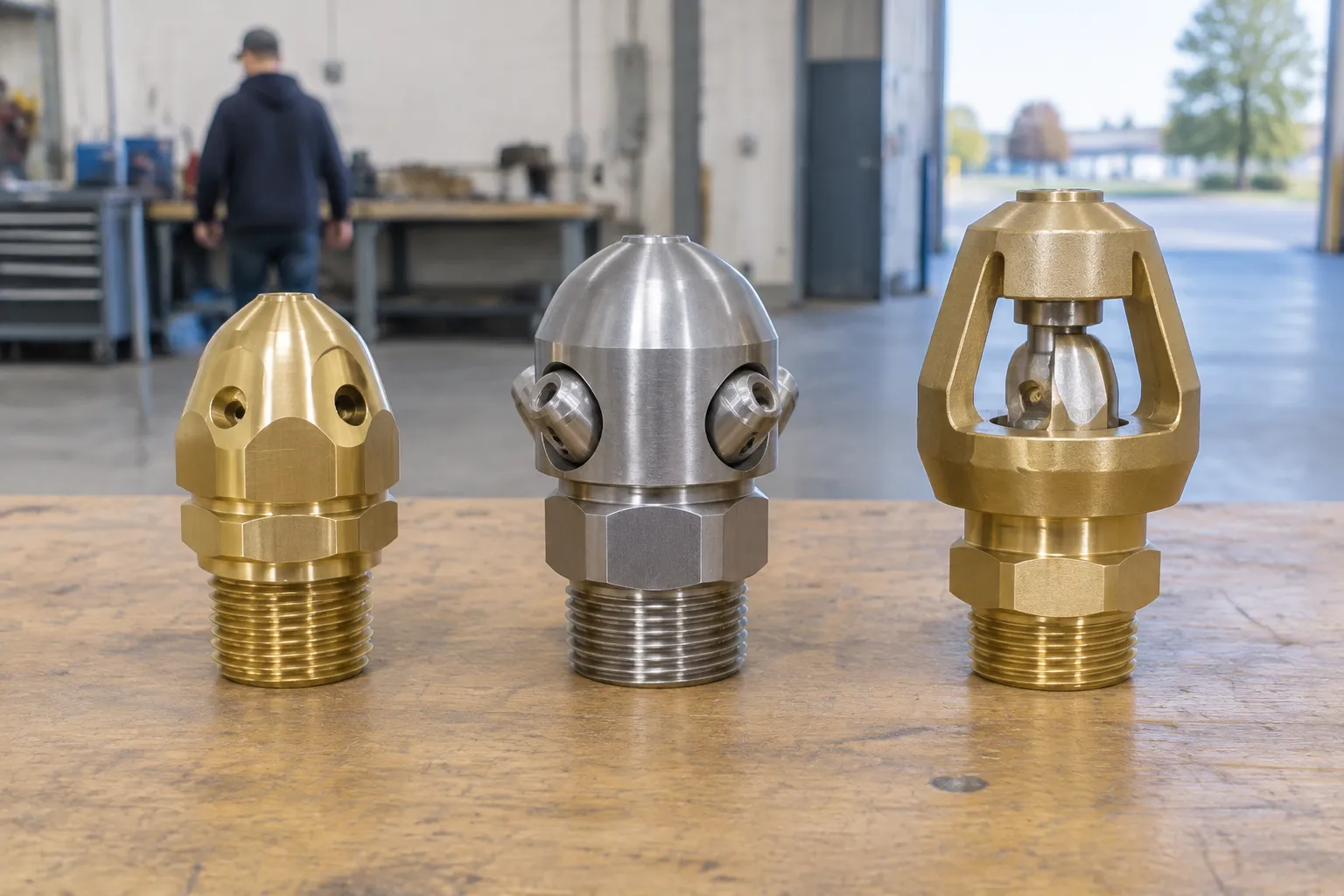
Hydro jetting clears a drain with high-pressure water fired from a hose, and the nozzle on the end of the hose sets what the water does. Penetrating nozzles open a blocked line, flushing nozzles wash the pipe wall, rotating nozzles scour grease and scale, and root cutters chop roots. A plumber picks the nozzle after finding out what the blockage is. This page explains the types in plain words, so you understand a quote. If your problem is one slow fixture, start with clogged toilet and drain help before paying for a jetting visit.
What are the main hydro jetting nozzle types?
There are four working groups of nozzles. Penetrator nozzles aim most of the water forward to punch through a blockage. Flushing nozzles aim water back and sideways to wash pipe walls. Rotating nozzles spin to scour grease and scale. Root-cutting nozzles use a spinning blade or a tight jet to cut roots. Manufacturers use different names, so ask the plumber what the nozzle does, not what it is called.
| Nozzle type | Where the water goes | Typically used for |
|---|---|---|
| Penetrating | Mostly forward, with small rear jets that pull the hose along | Opening a fully blocked line |
| Flushing or standard | Mostly backward and sideways | Washing out debris after the line is open |
| Rotating or spinning | Spinning jets across the pipe wall | Grease, soap scum and scale on the pipe wall |
| Root cutter | A spinning cutter or a tight rotating jet | Tree and shrub roots that have grown into the line |
| Specialty heads | Shaped for a pipe size or a bend | Larger pipes, or lines with turns and cleanouts |
The mix matters because a nozzle that is too aggressive for an old clay or cast iron line can do harm, and one that is too gentle will just leave the blockage in place. Plumbers often open the line with one nozzle and clean it with another on the way back.
How does a plumber choose the right nozzle?
The plumber works from what the drain is doing and what the pipe is made of. A camera inspection shows roots, grease, a bellied section, or a crack. Then the plumber picks a nozzle to match, adjusts the pressure to the pipe, and works from the cleanout toward the street or tank.
Clues that help the plumber choose:
- Which fixtures back up. One fixture suggests a branch drain, while several fixtures or a gurgling floor drain point to the main line.
- Warning signs. Slow drains, gurgling after a flush, a sewer smell, or standing water in a shower or floor drain are common warning signs of a deeper blockage. See plumber for sewer smell.
- Age and material of the pipe. Older homes may have clay or cast iron lines with cracks or joints that roots enter.
- History. Roots that came back last year need a root cutter and probably a longer-term fix.
Is hydro jetting worth it compared with snaking?
It can be, when the blockage is grease, scale or roots along the pipe wall and not a single clog. A drain snake or auger makes a hole through a blockage, while a jetter washes the wall of the pipe. For a one-off clog, snaking often costs less. For repeat clogs on the same line, jetting can clear the cause. Each method has a place, and drain cleaning companies explains how the options compare.
Jetting is not a repair. If a camera shows a collapsed section, a belly that holds water or a broken joint, jetting will not fix the pipe, and the water can wash out soil around a cracked line. That is when a plumber discusses sewer line repair. Ask to see the camera footage before and after.
How long does hydro jetting take and how long does it last?
A straightforward residential line is often cleared within a visit of an hour or two, and a camera check beforehand adds time. How long the result lasts depends on the cause. Grease and soap buildup can return if the habits that caused it stay the same, while roots grow back unless the pipe is repaired. No one can promise a duration, so be careful of a quote that does.
What stretches the result:
- keeping grease, wipes and food scraps out of kitchen and toilet lines;
- scheduling a camera check after the jetting to confirm the pipe is clean;
- repairing any crack where roots enter, since roots return through the same gap.
What affects the price of hydro jetting?
Price follows the length and size of the line, how hard the blockage is, how easy the cleanout is to reach, and whether a camera inspection is included. A plumber quotes the real price after assessing the line. The page hydro jetting cost goes into ranges and what raises them.
Other things that move the price:
- an after-hours or weekend visit;
- no cleanout, so the plumber has to pull a toilet or access the line another way;
- a second pass or a second nozzle for a stubborn blockage;
- follow-up repairs the camera shows are needed.
Compare quotes on what is included, not just the total. A cheap visit without a camera may leave you guessing about the pipe.
Can you buy or rent a hydro jetter yourself?
You can find jetting equipment for sale or for rent, from small electric units to truck-mounted machines. For a home drain, most people leave it to a plumbing business. Jetters run at high pressure, so an inexperienced user can injure themselves, flood a basement or crawlspace, or damage an old pipe. If a drain is a small, simple clog, try a plunger or a snake first, as in how to drain a clogged bathtub.
Equipment varies a lot: hose length, pressure rating, truck or trailer mount, and nozzle kit. The point for a homeowner is simpler. Ask which nozzle and what pressure the plumber plans to use on your pipe material.