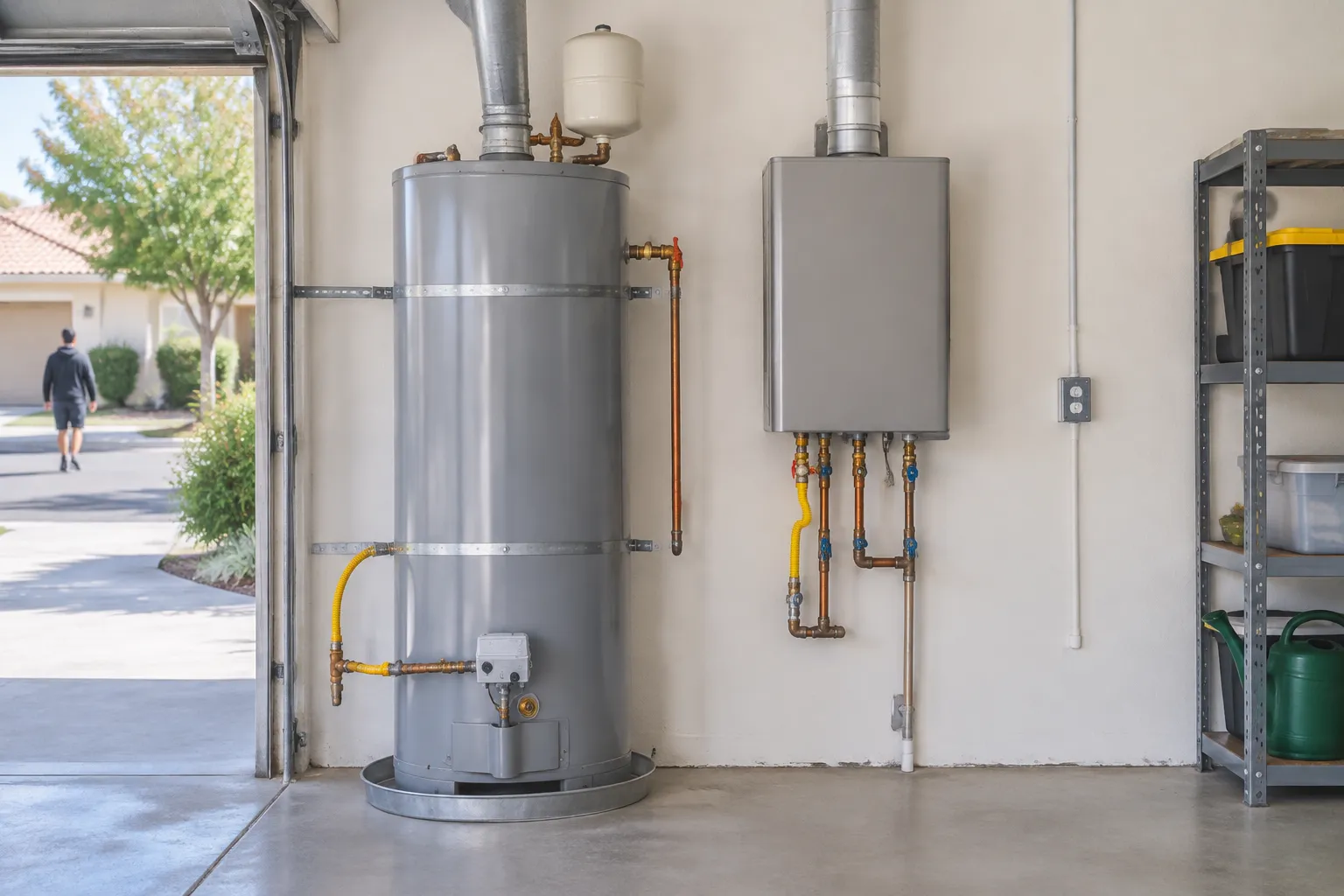
A tank water heater keeps a reserve of heated water and loses a little heat around the clock. A tankless unit heats water only when a tap opens, so it cuts that standby loss and can last longer, but it costs more to buy and install and can only deliver so much hot water at once. If you want a unit fitted, tankless water heater installation explains the work, and the sections below help you decide first.
Which is better for a home: tank or tankless?
Neither is better for everyone. Tank units cost less up front and are simple to replace, but they take floor space and run out when the tank empties. Tankless units give continuous hot water and save energy for lighter users, but they need the right gas line or power supply and a proper vent. Your usage and your house decide.
The US Department of Energy says demand-type heaters can be 24% to 34% more energy efficient than conventional storage heaters in homes that use 41 gallons of hot water a day or less. The gain is smaller for households using much more. ENERGY STAR gives a typical life of about 20 years for gas tankless units, longer than a conventional tank, which commonly lasts a decade or so and varies with water quality and care.
| Tank | Tankless | |
|---|---|---|
| Hot water supply | Limited by tank size, then recovery time | Continuous, limited by flow rate |
| Standby heat loss | Yes | None |
| Typical lifespan | Roughly a decade or more | About 20 years for gas units (ENERGY STAR) |
| Space | Floor space for a tank | Wall-mounted, compact |
| Upfront and install cost | Lower | Higher, especially if gas or venting changes |
| Upkeep | Flush, check anode rod and valve | Flush to remove scale, clean inlet filter |
| Power outage | Gas models may still work depending on design | Most need electricity to run |
What size tankless water heater do I need for 3 bathrooms?
Size by flow rate, in gallons per minute, not by tank gallons. Add up the fixtures that could run at the same time. ENERGY STAR lists typical flows of 2.5 gallons per minute for a shower, 3.3 for a clothes washer, 2.2 for a sink and 1.3 for a dishwasher. Two showers and a dishwasher together come to about 6.3, so a three-bathroom home usually needs a larger unit or two units.
Temperature rise also matters. The unit has to heat incoming water from its cold temperature to the setpoint, and colder incoming water means lower flow at the same output. A plumber considers your incoming water temperature, your peak use and whether any units can be staged. ENERGY STAR advises asking an installer to confirm the right flow rate, whether the existing gas line is large enough, whether power is nearby for models with powered venting and how the gases will be vented.
Households that often run two showers and a washer at once may prefer two tankless units or a large tank. Single users with a short shower habit can do well with a smaller unit.
How long do tankless water heaters last, and what upkeep do they need?
Gas tankless heaters are rated at roughly 20 years in ENERGY STAR material, provided they are maintained. The main upkeep is flushing the heat exchanger to remove mineral scale, which builds faster in hard water, and cleaning the inlet filter. Tank heaters need a flush, a check of the pressure relief valve and an anode rod inspection.
Skipping upkeep shortens the life of either type. The tankless water heater flush page explains the steps, and for tanks, see flushing a water heater and the anode rod replacement guide. Tank units also fail by leaking when the tank wall corrodes through.
What does installation involve for each type?
A tank swap is often the simpler job when the new unit fits the same spot, uses the same fuel and the same connections. California requires water heaters to be braced or strapped against earthquakes, and a permit is common for replacements. Ask the plumbing business whether it pulls the permit and arranges the inspection.
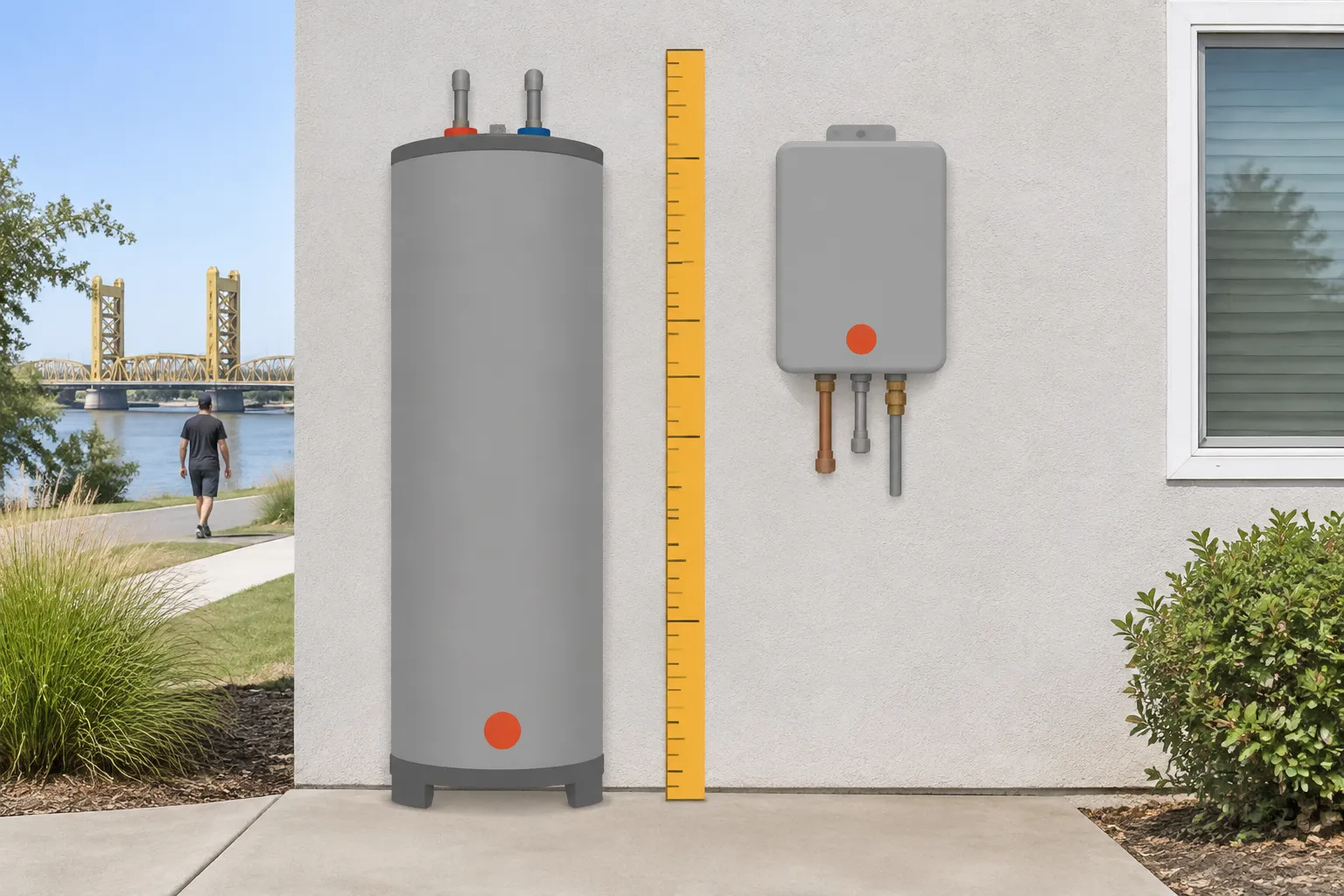
A tankless install often involves more. A gas unit may need a larger gas line and a different vent. An electric tankless unit draws a heavy electrical load, so the panel and the circuit must handle it. Moving from a tank to tankless can mean new vent routing, a condensate drain, isolation valves and a new wall mount. The page on gas versus electric water heaters compares fuels. Gas line work requires a California contractor license, so it is not a DIY job.
If you use propane, ask how a unit will be fed. A small portable cylinder is unlikely to keep a whole-house unit supplied, and the plumber can size a larger tank or confirm a natural gas connection.
What should you compare in quotes?
Compare the unit's rated output and fuel, what the price includes (venting, gas line changes, permit, disposal of the old heater, isolation valves, expansion tank), the written warranty on parts and labor and what the business expects from you. Prices vary widely with the home, so a plumber quotes after a site visit.
For ranges, see water heater cost and tankless water heater cost. If your unit is leaking or has failed, the water heater repair plumber page covers the repair side. Ready to compare? Request quotes and mention how many bathrooms and fixtures you run at once.