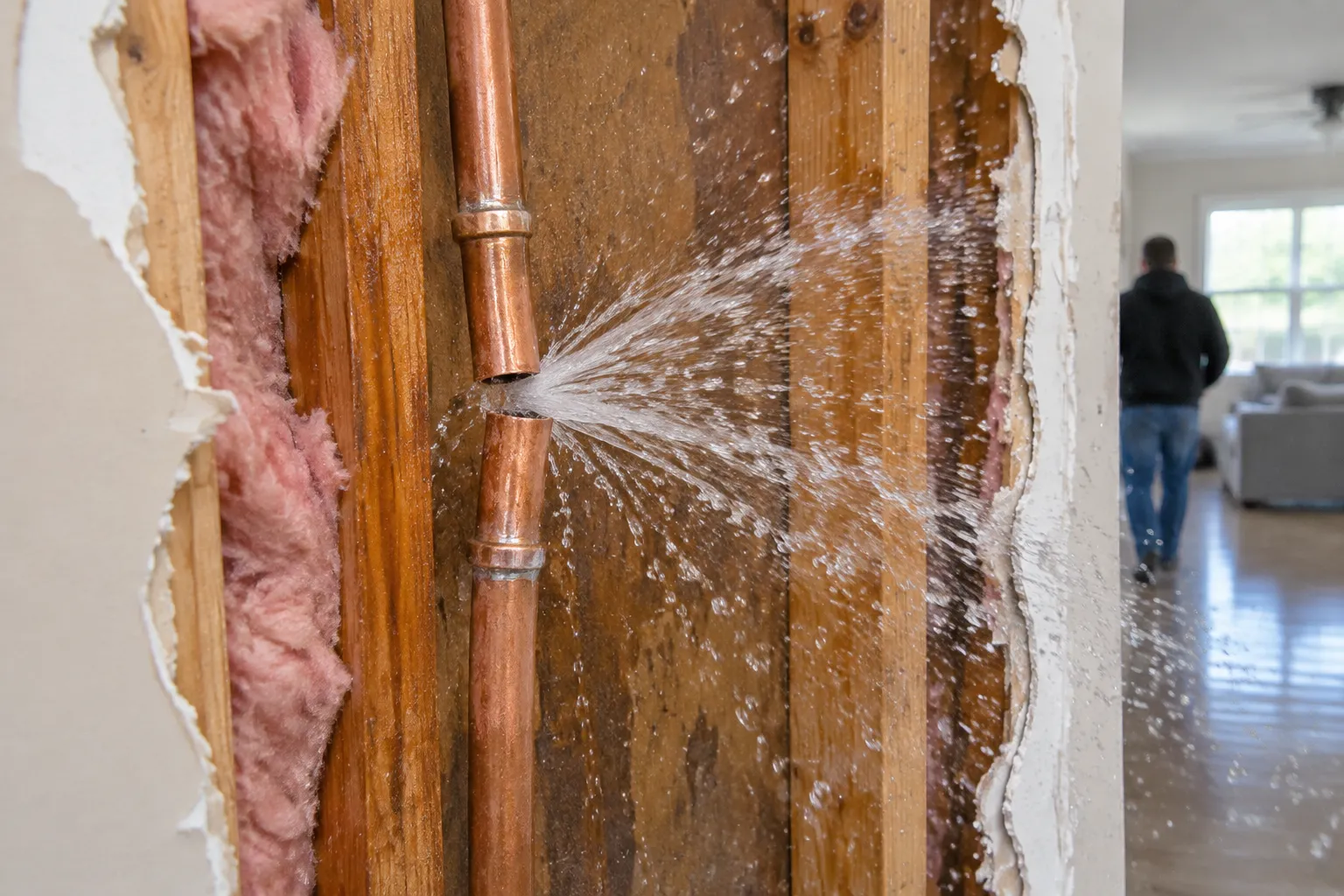
If a pipe bursts, shut off the water at the main valve, open a faucet low in the house to drain the line, turn off the electricity to any wet area if you can do it safely, and call a plumber. A burst pipe is serious because water keeps flowing until you stop it, soaking drywall, flooring and insulation within hours. This page is part of the frozen pipes and leaks guide and covers the steps, causes and costs. You can ask local plumbing businesses for quotes on the quote page.
What should you do right now if you have a burst pipe?
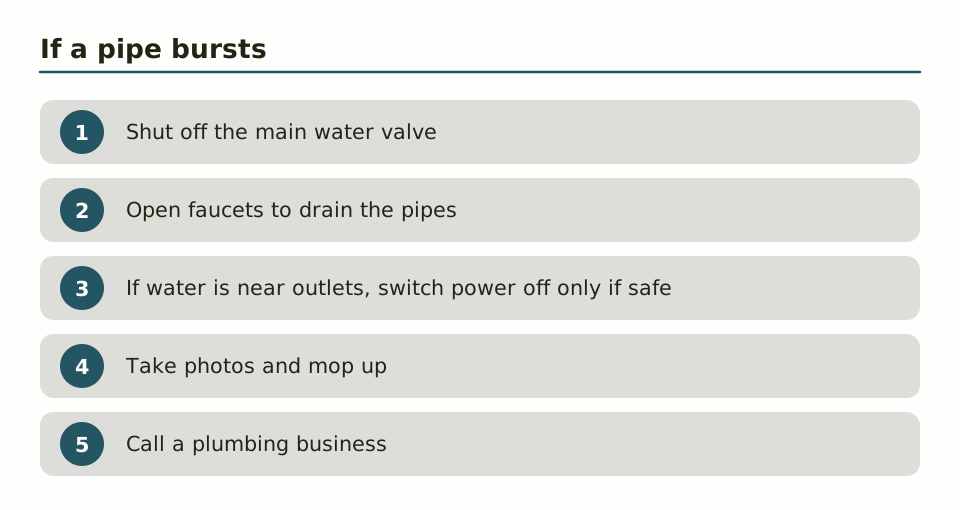
Stop the water, then limit the damage. Shut off the main water valve, usually at the street side of the house, near the water meter or where the line enters the home. Open the lowest faucet and flush toilets to drain the line, move belongings out of the wet area, and photograph the damage before you clean up. Then call a plumber.
Step by step:
- Shut off the main valve. Learn where it is before you need it.
- Turn off the water heater's power or gas if the heater may have drained.
- If water is near outlets, light fixtures or appliances, turn off power to that area at the breaker, only if the panel is dry and you can reach it safely. If not, leave and call the utility or 911.
- Open taps to drain the pipes and relieve pressure.
- Take photos and video for your insurer.
- Mop and run fans to start drying. Do not wait for the repair.
How serious and how urgent is a burst pipe?
Very. A full split in a pressurized supply line can release many gallons a minute, so even a short delay can ruin a floor or ceiling. It becomes an emergency the moment water is flowing and you cannot stop it. Once the main is shut off, the urgency drops, but wet drywall and insulation can grow mold if they stay damp, so repair and drying should start promptly.
If you cannot find or close the main valve, call a plumber right away and say so on the phone. For after-hours calls, read about emergency plumber pricing and the emergency plumber page.
How does a burst water pipe happen?
Pipes burst when pressure inside the pipe exceeds what the pipe or joint can hold. The usual causes are freezing, corrosion that thins the wall, a failing joint, high water pressure, physical damage from nails or digging, and ground movement. In Stockton, freezing is occasional rather than common: the January average low in the 1991 to 2020 NOAA normals is near 39 degrees Fahrenheit, although individual nights can drop to or below freezing.
When a pipe freezes, water turns to ice and blocks the line, and pressure can build between the ice and a closed tap. The pipe may split without leaking until the ice melts, so water can start pouring after the thaw. The Red Cross steps for thawing a frozen line safely are summarized there.
Other warning signs before a burst: a pinhole spray, green or white crust on copper, discolored water, banging pipes and very high pressure. A plumber can test your pressure and fit or replace a water pressure regulator when it is too high.
How long does it take to fix a burst pipe?
A burst pipe in the open is often repaired in a few hours, including cutting out the damaged section and fitting a new piece. A pipe inside a wall or under a floor takes longer because the plumber has to find it and open access first. Cleanup, drying and wall repair are separate work and take days.
The plumber can give a time estimate once they locate the break. Ask whether the quote covers the opening and patching of drywall, or only the pipe. Many plumbing businesses do not finish drywall or paint, so you may need a second trade.
Is it expensive to fix a burst pipe?
A guide, not a quote: one published national guide puts burst pipe repairs at $200 to $1,000, with an average of $500, a burst main water line at $400 to $2,000 and a burst sewer line at $1,500 to $3,000. Water damage cleanup is separate work and is not included in those figures.
| Situation | Typical range |
|---|---|
| Burst pipe repair | $200 to $1,000, average $500 |
| Burst main water line | $400 to $2,000 |
| Burst sewer line | $1,500 to $3,000 |
| After-hours flat fee on top of the hourly rate | $100 to $350 |
Prices rise with access, pipe size and material, the number of breaks, and evening or weekend work: after-hours calls often cost time-and-a-half to triple the standard rate. The plumber quotes the real price, so ask for the trip fee, hourly rate and any minimum in writing before the work starts.
Who is responsible for a burst water pipe?
The owner is responsible for pipes inside the home and on the private side of the water meter, and the water supplier usually handles the main under the street up to the meter, so ask your supplier if the break is on that side. If you rent, tell your landlord or property manager in writing right away and keep copies. Who pays for damage to belongings or neighboring units depends on the lease, the cause and the insurance policies involved.
On insurance, the California Department of Insurance explains that a sudden and accidental event is the usual covered case, while seepage and long-running leaks are not, and that insurers can deny further damage you failed to prevent. Policies often exclude the cost of repairing the broken pipe itself. Call your insurer before major work, keep the plumber's written report and keep the receipts.
For a split pipe under a sink, see pipe burst under sink. For a leak with no obvious burst, see plumber for a water leak.