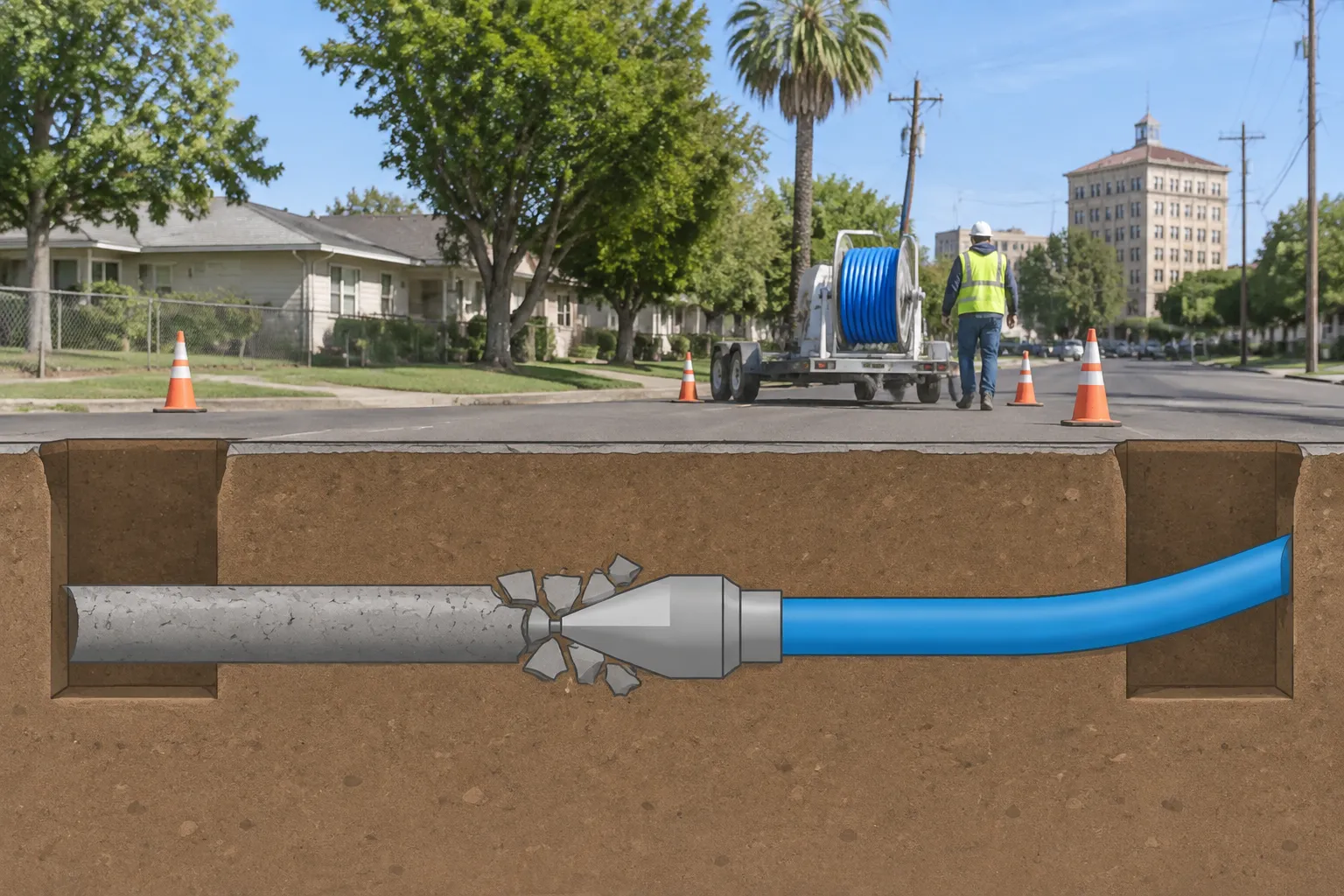
"Trenchless pipe burst" usually means pipe bursting, a method of replacing a damaged sewer line with a new one without digging a trench along its whole length. A plumber digs a pit at each end, pulls a bursting head through the old pipe so it breaks outward, and draws the new pipe in behind it. It can also be used to describe lining. If your problem is a failing sewer line in general, the sewer line repair plumbers page covers all the options.
What does trenchless pipe burst mean?
Pipe bursting is a trenchless replacement. A cone-shaped head, pulled by a cable or rod from an exit pit, fractures the old pipe and pushes the pieces into the surrounding soil while a new pipe, usually a continuous plastic such as high-density polyethylene, is pulled in right behind it. You end up with a new pipe along the old route.
The phrase confuses people, because a "pipe burst" in the home is a supply line that has split and is flooding. That is a different emergency: shut off the main water valve and call a plumber. For supply lines, see the burst pipe plumber page. A trenchless pipe burst is planned work on a drain or sewer, not a flood.
When is pipe bursting a good fit?
It fits a sewer line that is cracked, root-filled, corroded or made of a brittle old material, runs fairly straight and has room for two small pits. It also suits a line that needs a larger diameter. Because the new pipe is whole, it can replace sections that lining cannot repair, such as a pipe with many bad joints.
It is less suitable when the line is under a structure that cannot take ground movement, when other utilities run very close, when the ground is too difficult or when the old pipe has been repaired with clamps or repairs that block the head. A camera inspection and a locate show the route before the plumber chooses.
Compare with lining: lining puts a resin sleeve inside the existing pipe, which keeps the old diameter and leaves the old pipe in place, while bursting installs a new full-strength pipe. The page on trenchless versus traditional sewer repair lays out where each fits.
How does the process work, step by step?
First a camera inspection and a utility locate. Then the plumber digs an entry pit where the line connects to the house and an exit pit near the main or the other end, cleans the line, pulls the bursting head and new pipe through, reconnects at both ends and tests the line before the pits are backfilled and restored.
Before digging, the contractor must notify the regional notification center. California law requires notice to USA North 811 at least two working days before excavation, and marked utility lines are respected. You can ask for the ticket number. The plumber also checks the permit requirement with the city, and an inspection often follows.
During the work, the sewer is usually out of service. Ask how long, and whether a temporary arrangement is offered. Landscaping, pavers or a driveway over the pit may need restoring. Ask whether restoration is in the price.
What to do if a sewer pipe has burst or backed up?
Stop using water in the house, because the wastewater has nowhere to go. Keep people and pets away from any sewage, avoid touching it with bare skin, open windows to ventilate and call a plumber. If the backup is in a low drain or tub, a blockage in the main line is the usual cause.
A plumber can clear a blockage and run a camera to find out whether the pipe is broken. Emergency work is available from many plumbing businesses; say it is an emergency when you ask for quotes and a local plumbing business will get back to you. The emergency plumber page explains how to prepare, and plumber for a sewer smell covers a smell without a backup.
If you see a wet, sunken or soggy patch over the sewer route in the yard, or smell sewage outside, the pipe may have broken in the ground. A trenchless fix may be possible if the line has not collapsed.
Who can do the work, and what should you ask?
California's contractor board says building sewers can be installed or repaired by contractors holding a general engineering (A), plumbing (C-36), sanitation system (C-42) or pipeline (C-34) license, and a general building contractor only within a limited scope. Check any contractor at cslb.ca.gov.
Questions to ask each business:
- Do you recommend bursting, lining or a trench, and why, given the camera footage?
- What pipe material and diameter will go in?
- How are the connections at the house and at the main made?
- Is the permit, the 811 notice and the inspection included?
- What restoration is included, and what is left to me?
- How long will the sewer be out of service, and what warranty applies?
Prices depend on length, depth, access, pipe size, what lies above the route and permit fees. See sewer line replacement cost for what moves the price. Ready to compare? Request quotes and mention what the camera showed.