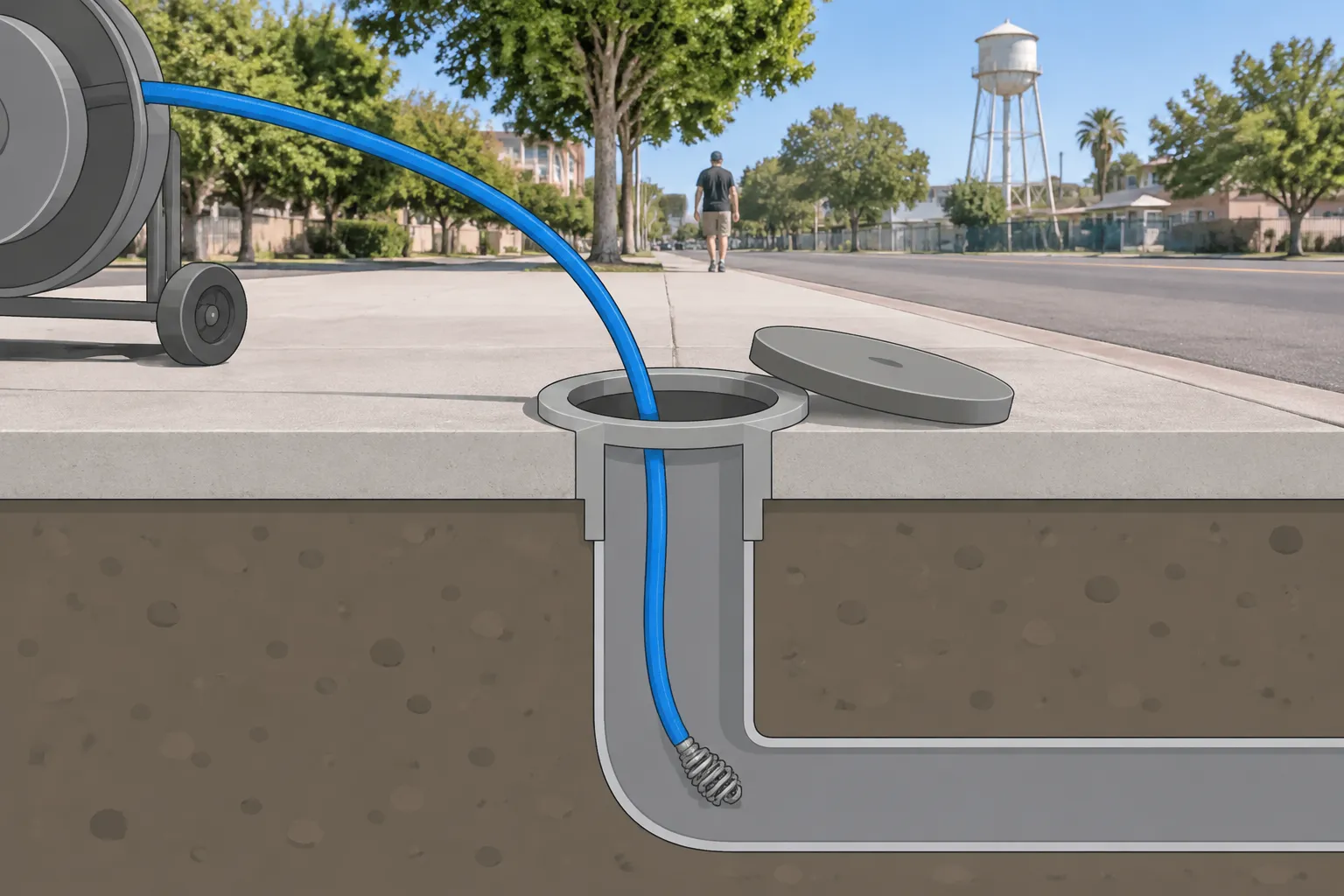
A drain cleaning company clears a blockage from a sink, tub, shower, toilet, floor drain or the main line that leaves your house, and often inspects the pipe afterward. The common methods are a hand or machine cable (a snake), a high-pressure water jet, and a camera to see what is wrong. This page explains each method and what outdoor drain work involves. It also covers how to compare local businesses, and when to try something yourself first. For the full picture on blockages in toilets and lines, see drain cleaning and clogs.
What does a drain cleaning company actually do?
It clears the clog, then checks that water moves freely. The plumber finds where the blockage sits, chooses a tool that fits the pipe, removes or breaks up the blockage, and flushes the line. A good visit also tells you why it happened, such as grease, hair, roots or a damaged pipe.
A blockage in a single fixture is usually close to the fixture and may be cleared from the trap or the nearest access point. A blockage that affects several fixtures, or one that sends water up a floor drain or tub, points to the main drain line, which is a bigger job and often uses a machine. If you smell sewage or see standing water around the house, the cause may be further along the line, and plumber for sewer smell helps you read the signs.
The first visit should end with a clear answer: cleared, partly cleared, or a pipe problem that cleaning will not fix. If the same drain blocks again within weeks, ask for a camera look.
Which drain cleaning methods are there, and when does each fit?
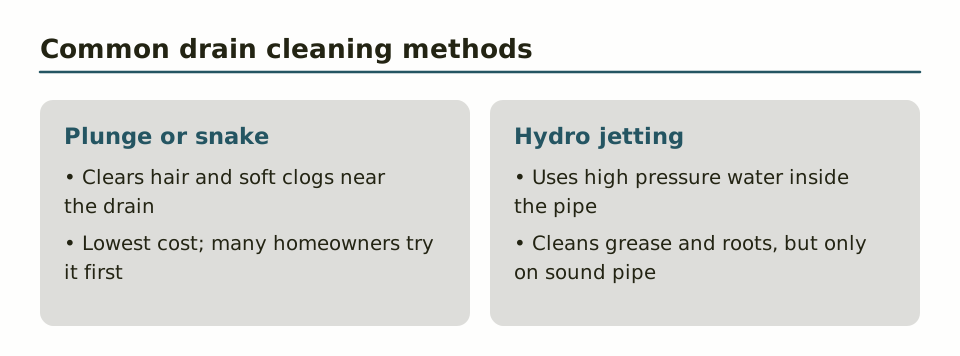
Three methods cover most jobs: a cable that bores through or retrieves a blockage, a water jet that scours the pipe wall, and a camera that shows the cause. Cables suit most household clogs. Jets suit grease and heavy buildup. Cameras suit repeat blockages, roots and suspected breaks.
| Method | What it is | Often used for | Watch for |
|---|---|---|---|
| Hand or machine cable (snake) | A rotating or hand-fed cable with a cutting or retrieving head | A hair or soap clog, a toy or object, a simple blockage | It can clear a hole through grease without removing the coating on the pipe |
| Hydro jetting | Pressurized water from a nozzle that scours the inside of the pipe | Grease, scale, heavy buildup, roots in sturdy pipe | Not suited to every old or damaged pipe, so the plumber should check first |
| Camera inspection | A small camera on a cable | Repeat clogs, slow main lines, before buying a house | Ask for the recording or photos |
For the nozzle choices and pressures, hydro jetting nozzle types goes into the detail, and hydro jetting cost covers what moves the price. If you only have one slow tub, start with how to drain a clogged bathtub or shower clogged drain before you book.
Chemical drain cleaners are a common first try. Read the label closely, never mix products, and tell the plumber you used one, because the liquid can still be in the pipe and can burn skin.
What is outdoor drain cleaning?
Outdoor drain cleaning clears the pipes outside the house: the line from the house to the street or septic tank, yard and driveway drains, and the cleanout fitting that gives access. It often uses a longer machine cable or a water jet, and a camera if roots or a collapsed pipe are suspected.
A cleanout is a capped pipe, often near the house wall or in the yard, that lets the plumber reach the line without going through a fixture. If you do not know where yours is, the plumber can find it. Stockton has many older neighborhoods with mature trees, and roots finding a joint is a common cause of repeat main-line blockages. A line that has been cleared several times is worth inspecting by camera before you pay for a fourth cleaning.
A yard drain that floods in heavy rain can be a surface drain blocked with leaves and soil, not a sewer problem. You can check the grate and clear debris by hand, wearing gloves. If water backs up inside the house, though, that is not a yard issue, and you should call.
If the line is damaged and not just blocked, cleaning will only help for a while. Your options are then covered in sewer line repair plumbers.
How do you choose a drain cleaning service near you?
Compare at least two or three written quotes, and ask each business the same questions. Look at what method they plan to use, whether a camera is included, what happens if the clog returns, and how they price: flat fee, hourly, or per section of pipe. Ask for the final price before they start.
Useful questions:
- Do you hold a California contractor license, and what is the number?
- Is the price fixed or an estimate, and what could change it?
- Will you use a camera, and will I see what you found?
- If the same drain blocks again soon after, what do you do?
- Is there an extra charge for after-hours, weekends or travel?
California generally requires a contractor license for work that needs a permit, uses additional workers, or costs $1,000 or more in labor and materials, according to the Contractors State License Board. Many routine drain clearings come in under that figure, but larger repairs after a camera finding often do not. Anyone can check a business at cslb.ca.gov. This site is a quote service, and the business that visits holds its own license.
If you searched for the top-rated service: no list of reviews can tell you who will do the job well in your house. Specific answers to the questions above tell you more.
How much does drain cleaning cost?
Price depends on the fixture or line, how deep the blockage sits, the method, access, and the time of day. A simple fixture clog costs less than a main line cleaning that needs a machine or a jet, and a camera inspection adds to the bill. The plumber quotes the real price, and nothing on a website can replace that.
No figure is given here because published ranges differ widely by region and method, and a number without your pipe in front of the plumber would mislead. Ask for the call-out charge separately from the clearing charge, and ask whether the camera is included. If a business quotes a very low price on the phone and a much higher one on arrival, ask what changed and ask for it in writing.
Local conditions matter too: older homes with clay or cast iron pipe may need gentler methods, and homes with long lateral lines may need more cable.
How can you keep drains clear between visits?
Keep grease, wipes, coffee grounds and food scraps out of drains, use hair catchers in showers, and run hot water after washing dishes. These habits do more than any product. Flush only toilet paper and human waste, even if a package says "flushable".
Pour cooled cooking grease into a can and throw it away. If you notice a drain slowing, deal with it early, because a partial clog becomes a full one. Tree roots near the main line are one problem you cannot control by habit, so a camera look every few years can be sensible if you have had repeat trouble.