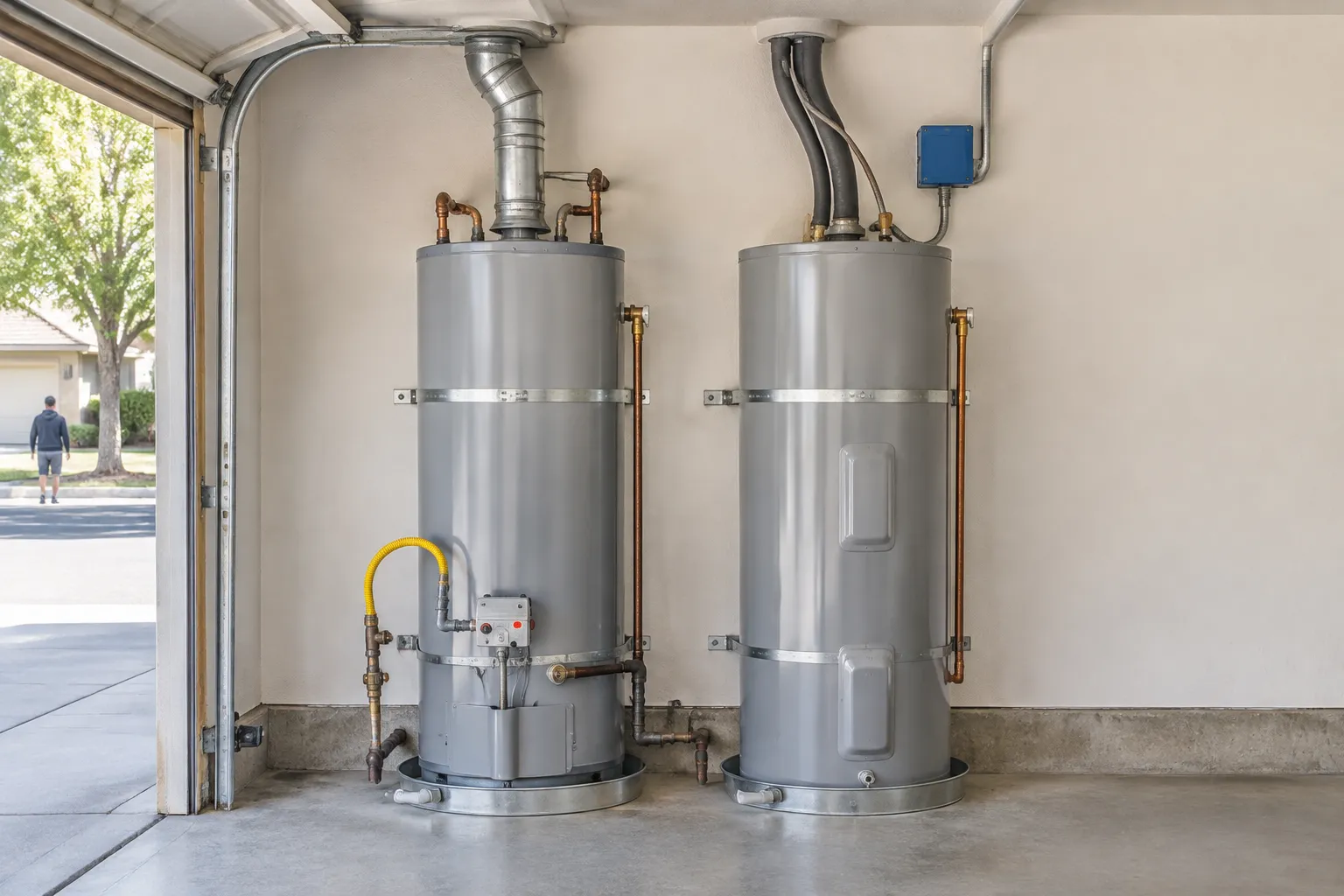
A tank water heater typically lasts 8 to 12 years, whether it runs on gas or electricity. Rheem, a manufacturer, gives that range for traditional tanks, and the guide figures below show a similar installed price for both. It is part of the water heater repair and replacement guide. The real choice comes down to what your home already has: a gas line and vent make gas easy, a spare 240-volt circuit makes electric easy, and switching fuel adds cost. This page helps you decide before you ask for quotes on the quote page. Start at the Stockton plumbing home page for other jobs.
How long do water heaters last, gas and electric?
Rheem puts a traditional tank water heater at 8 to 12 years on average and tankless units at 15 to 20 years or more with care. It does not give a separate figure for gas and electric, so treat any claim that one type lasts far longer with caution.
What changes the number is water quality, water pressure, usage, temperature setting and maintenance. A. O. Smith, another manufacturer, lists those same factors in its manuals and adds that a water softener can shorten tank life. Two habits extend a tank's life: flushing the tank and keeping up the anode rod, which Rheem says to inspect and replace as needed.
Signs a tank is near the end: rust-colored hot water, rumbling from sediment, moisture at the base, or a unit past 10 to 15 years with repeat problems.
Is it cheaper to heat water with gas or electric?
It depends on your local gas and electric rates, which change, so no fixed answer applies to every Stockton home. Gas often costs less per unit of heat where it is available, and electric resistance heating is simple but can cost more to run, but your own rates decide it. An electric heat pump water heater is far more efficient than either, but costs more up front.
The Wikipedia summary of water heating notes that electric resistance units convert nearly all their electricity to heat, but may be less efficient overall once power plant losses are counted, and that heat pump units are much more efficient. For your home, ask each plumber for the unit's energy label, then compare it with your latest gas and electric bills. Use the plumber's estimate, not a national average, for running cost.
How much does each type cost to buy and install?
A guide, not a quote: Fixr puts a typical tank water heater at $900 to $3,000 installed, and its spans by fuel are $500 to $3,500 for electric, $700 to $2,700 for natural gas and $700 to $2,500 for propane. Heat pump or hybrid units run $1,200 to $4,600. The plumber quotes the real price for your house.

| Type | Typical installed range |
|---|---|
| Electric tank | $500 to $3,500 |
| Natural gas tank | $700 to $2,700 |
| Propane tank | $700 to $2,500 |
| Heat pump (hybrid) | $1,200 to $4,600 |
| Tankless | $1,200 to $3,500 |
What moves the range: tank size, whether you keep the same fuel, venting, a new gas line or circuit, permit fees and removal of the old unit. Replacing like with like is usually the cheapest. See water heater cost for a full breakdown, and the pages on a 40 gallon gas water heater, a 40 gallon electric water heater and a 50 gallon electric water heater for size-specific guidance.
Which one is safer?
Both are safe when installed and maintained correctly, but they carry different risks. Gas units burn fuel, so they need a vent that carries exhaust outside. A blocked, loose or disconnected vent can leak carbon monoxide, which the U.S. Consumer Product Safety Commission calls an invisible hazard. It advises a yearly professional inspection of fuel-burning appliances and CO alarms on every level of the home.
Electric units have no combustion, so there is no CO risk, but they need correct wiring and a working relief valve. For both, set the thermostat to 120 degrees Fahrenheit unless a plumber advises otherwise; the U.S. Department of Energy recommends that setting for most homes to reduce scalding risk. If you ever smell gas, get everyone outside first, then phone 911 and the gas utility.
What does it take to switch from gas to electric, or the other way?
Switching fuel is a bigger job than a swap. Gas to electric needs a dedicated 240-volt circuit, which may mean an electrician, an adequate panel, and capping the gas line. Electric to gas needs a gas line to the location and a vent through the roof or wall. Each step may need a permit, so ask the plumber to list who does what and who pulls the permit.
In the San Joaquin Valley, the local air district limits nitrogen oxide emissions from small residential gas water heaters under its Rule 4902, so ask the plumber to confirm the unit meets it. California also requires any water heater to be braced or strapped against earthquakes. Ask that both are in the quote.
Is it better to repair or replace?
Repair a young unit with a failed part, and replace an old one or one that leaks from the tank. Rheem suggests replacing when repairs would cost more than about half the price of a new heater, and repairing when the unit is under about 6 to 8 years old with no corrosion. A tank leak almost always means replacement. See the price table on the water heater repair page for repair ranges.