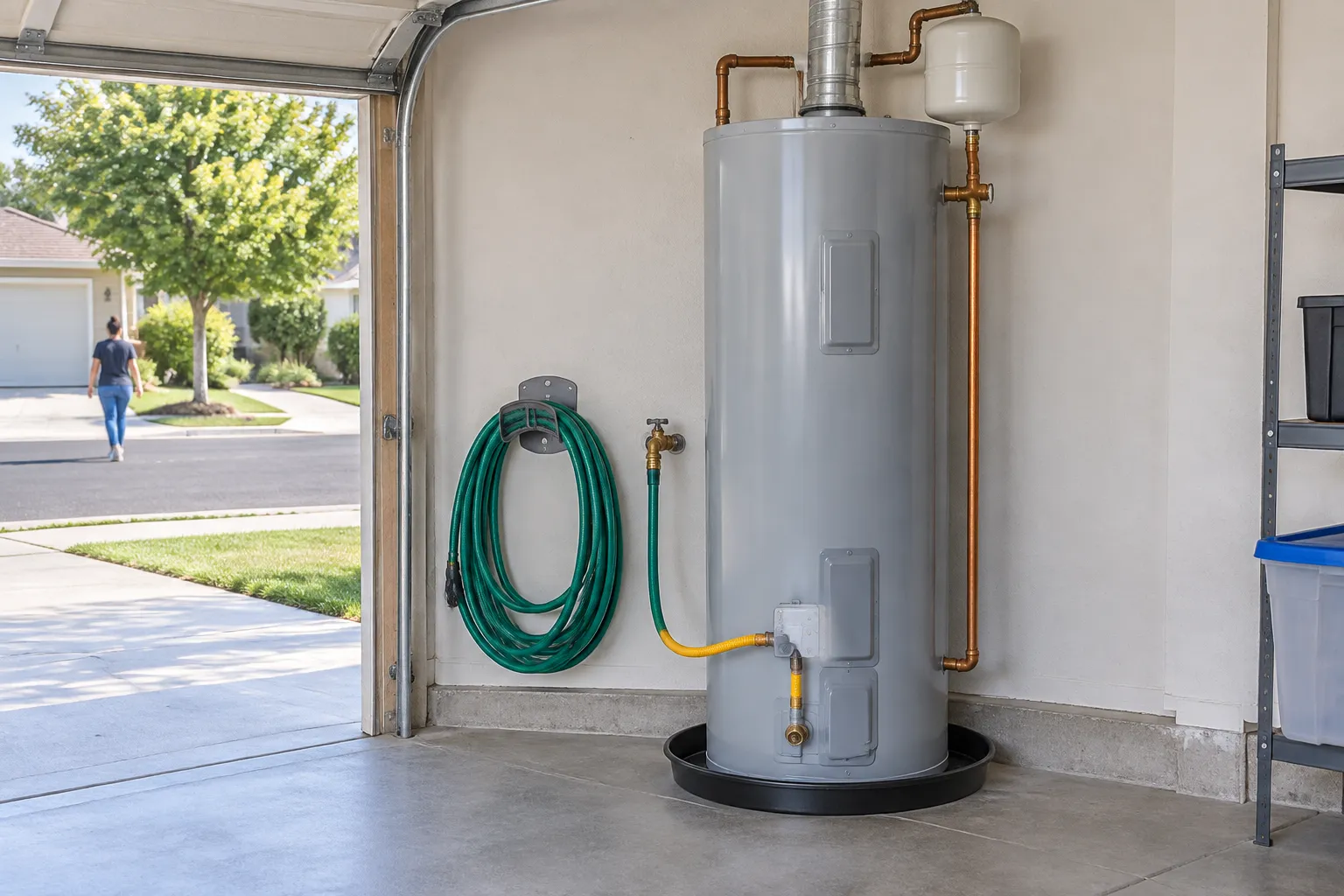
A 50 gallon electric water heater stores 50 gallons of water in an insulated steel tank and heats it with electric elements. It suits many households, but the tank size alone does not decide whether it will keep up. What counts is how much hot water you can get in your busiest hour, which the heater's "first hour rating" tells you. This page sits under water heater repair and replacement and covers sizing, the electrical needs, the code rules in California and what to ask for in a quote.
Is a 50 gallon electric water heater big enough for my home?
It is big enough if its first hour rating meets or beats your busiest hour of hot water use. The Department of Energy defines the first hour rating as the gallons of hot water a storage heater can supply in an hour starting from a full tank, and tells you to match it to your peak hour demand.
To estimate your peak hour, think of the busiest hour of your day, often a weekday morning. Add up the hot water for showers, a dishwasher or washing machine run, and basins. The DOE page has a worksheet to work through this. Then compare the figure with the first hour rating, which sits on the yellow EnergyGuide label and in the maker's literature. Two 50 gallon models can have different ratings, because the heating elements and the design differ.
If your household runs several showers back to back, a 50 gallon unit may run out, and a larger tank, a heat pump model or a tankless unit may suit better. If you are not sure, ask the plumbing business to go through your daily use with you before it quotes.
How long does a 50 gallon electric heater take to heat water?
Electric storage heaters recover more slowly than gas ones, because the elements add heat at a lower rate than a gas burner. After you drain a lot of hot water, expect to wait for the tank to catch up. The exact recovery time depends on the wattage of the elements and the starting temperature, and the manual states it.
Two practical effects. A 50 gallon electric tank is fine for steady use across the day, but back-to-back long showers drain the hot water, and it recovers slowly after that. And the heater costs more to run in a house with high electric rates than a comparable gas heater on a cheaper fuel, so check your rates. The electric versus gas comparison looks at that decision, and the 40 gallon electric page looks at the smaller size.
A thermostat setting that is too high wastes energy and raises the scalding risk. Ask the plumber to set it to a safe level that still meets your needs, and read the manual for the recommended range.
What does the installation need electrically?
An electric storage water heater runs on a dedicated 240-volt circuit. The heater label states the voltage and wattage, and the manual states the breaker size and wire gauge. Replacing a heater with a different model can mean the old circuit no longer matches, so ask the plumber to check the label against your panel before you buy.
If the new heater has the same voltage and wattage as the old one and the wiring is sound, a swap is simple. If it needs a different circuit, an electrician may have to add or upgrade the wiring, which changes the price. Never open the heater's access panels with the breaker on. Water and power together are dangerous, and a tank that is not full must not be powered, because the elements can burn out in minutes when dry.
Other points to check on the quote:
- A new temperature and pressure relief valve and a discharge pipe that runs to a safe drain. Manufacturer manuals say the discharge pipe must be left open.
- New water connectors, a shut-off valve and, if your system has a check valve or pressure regulator, an expansion tank.
- A drain pan and line if the heater sits where a leak could damage a floor.
- Removal and disposal of the old tank.
What does California require for a water heater install?
California requires new and replacement water heaters to be braced, anchored or strapped against earthquake movement. Local permit handouts describe two straps, one in the upper third and one in the lower third of the tank. Many cities also want a plumbing permit for a replacement, and the work must be done by a licensed plumber (CSLB C-36) where a permit applies.
Ask the City of Stockton building division, or San Joaquin County if you are outside the city, what applies to your address, since fees and steps differ by jurisdiction. This page cannot quote a permit fee. A plumbing business that handles the permit should tell you whether it is in the price and arrange the inspection.
On energy rules, the 2025 California energy code pushes heat pump water heaters mainly in new homes. A 2024 federal rule sets higher efficiency standards for new water heaters from May 6, 2029, which the Department of Energy expects to push heat pump technology into many electric storage models. Rules can change, so ask your plumbing business what applies when you buy, and whether any rebates are running for efficient models.
How long will a 50 gallon electric water heater last?
The Department of Energy puts the typical life of a conventional storage heater at 10 to 15 years. Actual life depends on the water, the care the heater gets and how hard it works. Signs that it is near the end include rust-colored water, rumbling or popping noises, water around the base and a tank that no longer keeps up.
Flushing sediment and checking the anode rod can extend its life. The water heater flush page and the page on anode rod replacement explain the maintenance. A leak from the tank itself means replacement, and the water heater leak page shows how to tell. When you replace, ask about the warranty length on the tank and on the elements, and ask what the warranty requires in terms of installation and care.
For the costs of replacement, the price drivers and how they affect the quote, see the water heater cost page. This page does not give a price because the figure depends on the model, the circuit work and the permit.