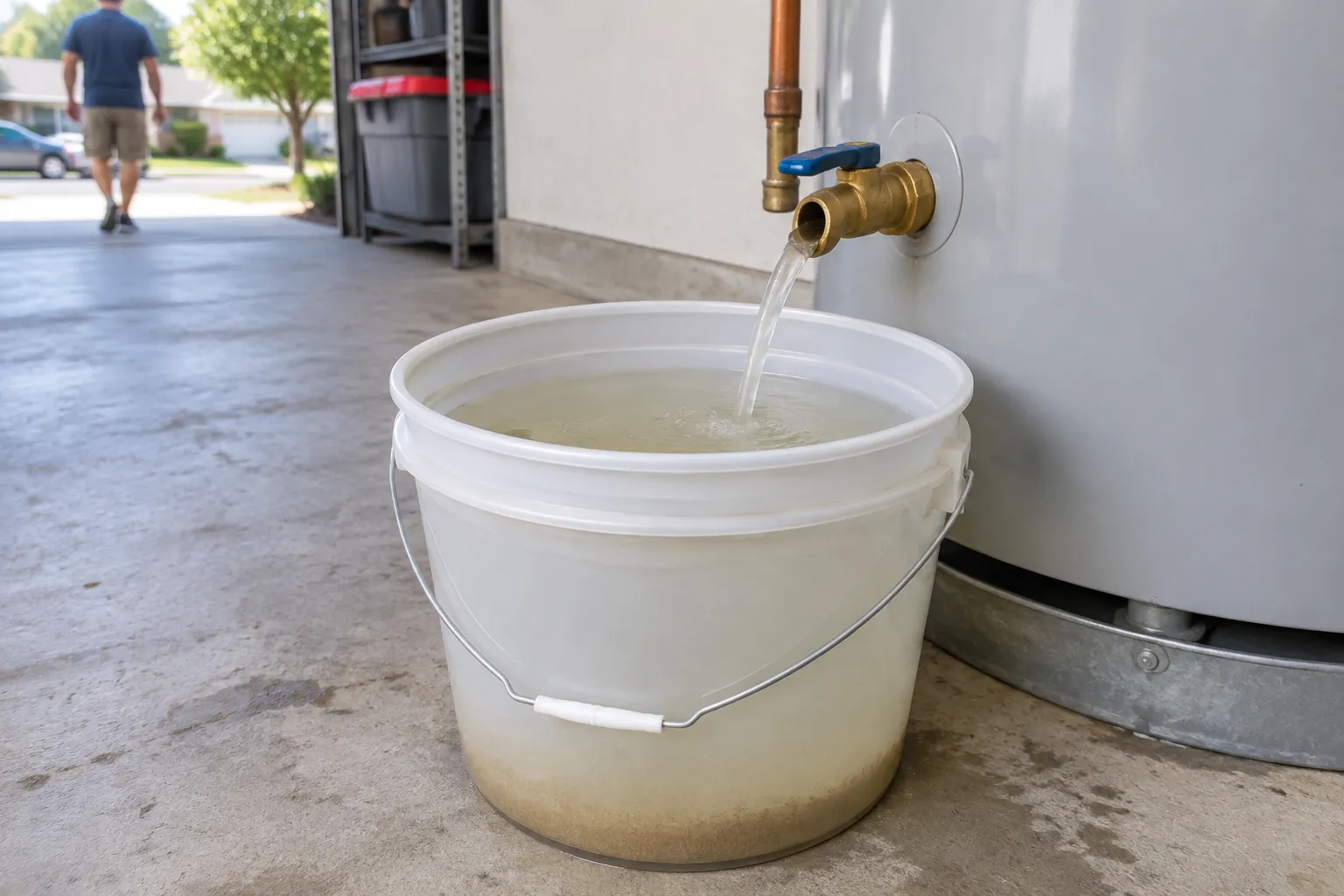
Flushing a water heater means draining water from the bottom of the tank so the mineral sediment that has settled there leaves with it. The materials are a garden hose and some rags, and the Department of Energy's Building America guide lists the job as free and low difficulty. It only applies to tank heaters. If hot water is the real problem, or the tank is leaking, flushing will not fix it. This page sits under anode rod and water heater replacement, which covers the other half of tank care.
What does flushing a water heater do?
A flush drains the bottom of the tank and the sediment with it: loose minerals from the water, flakes from the tank lining and the anode rod, and sand. Removing it can quiet popping and rumbling noises and may help the heater recover faster after a long shower. It is maintenance, not a repair. A tank that is already leaking or is near the end of its life is not a flush job.
In Stockton, the water supplier for your address, either Cal Water or the City of Stockton utility, decides what dissolves in your supply. The Cal Water Stockton district draws on local groundwater plus water bought from Stockton East Water District, so minerals can build up in a tank over time. A plumber can say how much sediment your tank holds by looking at what comes out of the drain valve.
How do you flush a water heater step by step?
Turn off power or gas, shut the cold inlet, open a hot tap, connect a hose to the drain valve and drain until the water runs clear. The sequence below follows the Department of Energy Building America guide. Check your heater's manual first, because valves and gas settings differ by model.
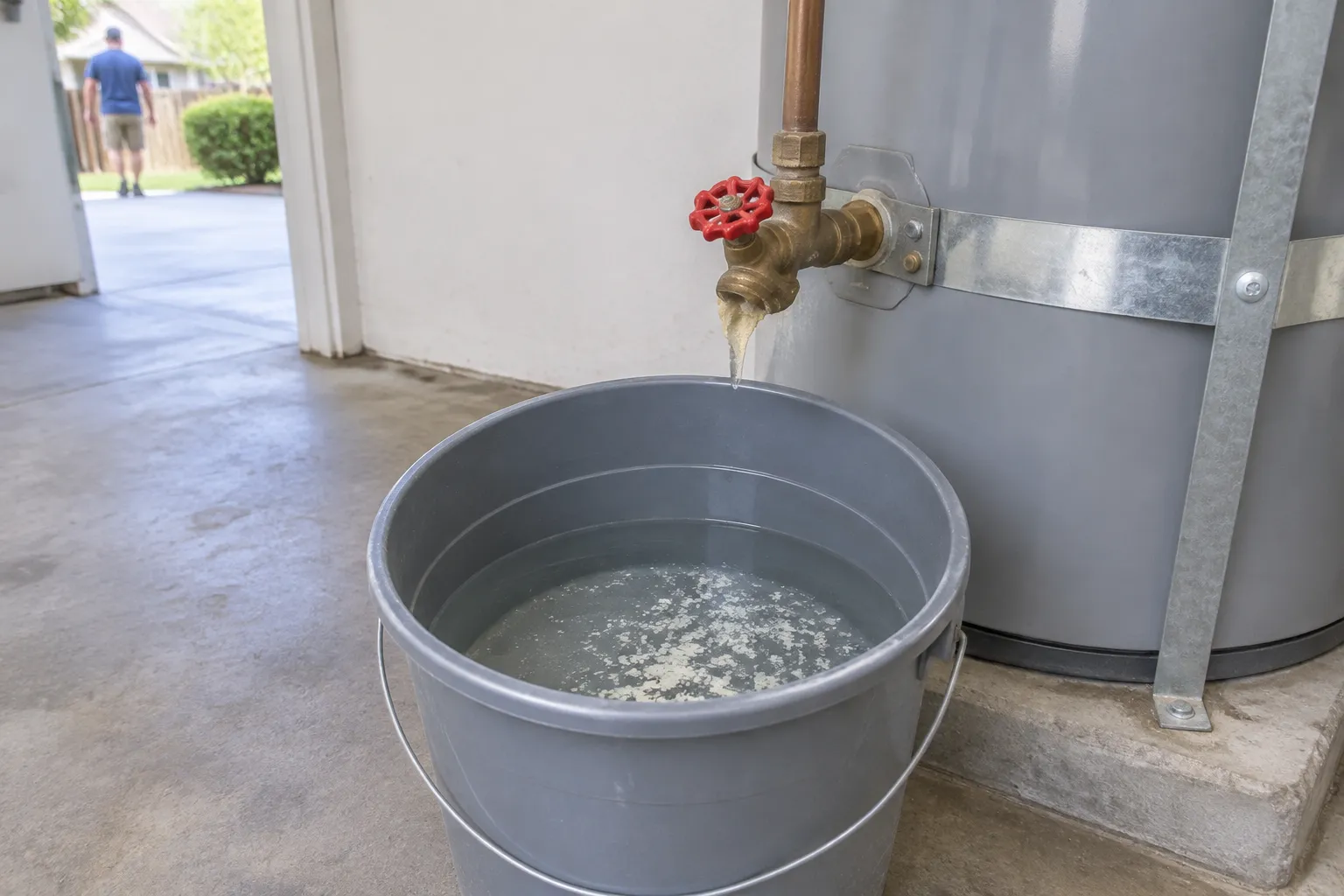
- Turn off the power or gas. For an electric heater, switch off the breakers or unplug it. For a gas heater, follow the manual to set the gas valve to off or pilot. The guide warns that a heater that turns on while empty can be damaged quickly.
- Close the cold-water inlet valve above the tank.
- Open a hot-water tap somewhere in the house, preferably above the tank's height, so air can get in while it drains.
- Attach a garden hose to the drain valve near the bottom, and run it outdoors or to a floor drain below the tank.
- Open the drain valve. The water will be hot, so be careful.
- After about 20 minutes, or once draining stops, open the cold inlet for about 10 seconds to stir the sediment, then close it and keep draining. Repeat until the water runs clear.
- Close the drain, refill the tank with the hot tap still open, and when water runs smoothly from the tap, close it.
- Restore power or gas. Wait several hours before doing laundry, since the water may be cloudy and the tank needs to reheat.
When should you call a plumber instead?
Call a plumber if the drain valve will not open or leaks after you close it, if you cannot reach the shutoff valves, if the heater is gas and you are not comfortable relighting it, or if the flush turns up a lot of rust or scale. A stuck plastic drain valve can snap, and then you have a leak you cannot stop without a replacement valve.
Gas work needs care. If you ever smell gas, see the guidance on gas line repair and leave the building first. PG&E says signs include a rotten-egg or sulfur smell and hissing or whistling sounds; leave the area immediately, call 911, then call PG&E.
A flush will not solve these:
- Water pooling under the tank or dripping from the relief valve, see water heater leaking.
- No hot water at all, which points to a thermostat, heating element or burner problem. See water heater repair.
- A heater near the end of its life, where replacement cost is the question.
Where is the reset button and how does the thermostat matter?
Many electric heaters have a reset button on the thermostat behind a metal access panel, and it trips when the heater overheats. Check the manual for where yours is. Do not open the panel until the power is off at the breaker, because the wiring behind it is live. If it trips again after you reset it, stop and call a plumber or electrician. The cause is probably a failed thermostat or heating element.
Thermostat settings matter for flushing too: turn the heater off before draining, and note the temperature setting so you can restore it. After a flush the thermostat and heating element have to bring a full tank back up to temperature, which is why hot water takes a while to return. A gas heater has a control dial and a pilot or igniter instead, so the manual is the guide. The difference between the two types matters here: turning an electric heater off means the breaker, turning a gas heater off means the gas valve, and the settings you note before you start tell you where to put them back. The age of the heater matters too, because an old heating element or thermostat can fail when the tank heats up again after a flush.
What affects the price when a plumber does the flush?
The price depends on how much work the heater needs and how easy it is to reach. A plumber quotes the real price after seeing the unit, and this is only a guide to what moves it:
- Access. A heater in a garage with a floor drain is quick. One in a closet or attic is not.
- Condition of the valves. Old drain valves may need replacing so the tank can drain at all.
- How much sediment. A neglected tank can take multiple cycles of draining and refilling.
- Extras. Checking the anode rod or the temperature and pressure relief valve while the plumber is there adds time, see anode rod replacement cost.
Tankless heaters need a different flush, with descaling and a pump and not a drain hose. See tankless water heater flush for that side.
Why does a leaking tank get mixed up with sediment?
Sediment and leaks are separate problems that sometimes show up together. A tank can leak at the top (fittings or the relief valve), from the bottom (the drain valve or a rusted tank), or from a supply connection. A leak from the tank body means the tank has failed, and no flush can repair it. A leak from a fitting or a valve is often repairable.
The first step in any leak is the same: switch off the power or gas, shut the cold inlet and keep the area clear. Then work out where the water starts. If the tank body is the source, ask for replacement quotes rather than a repair.