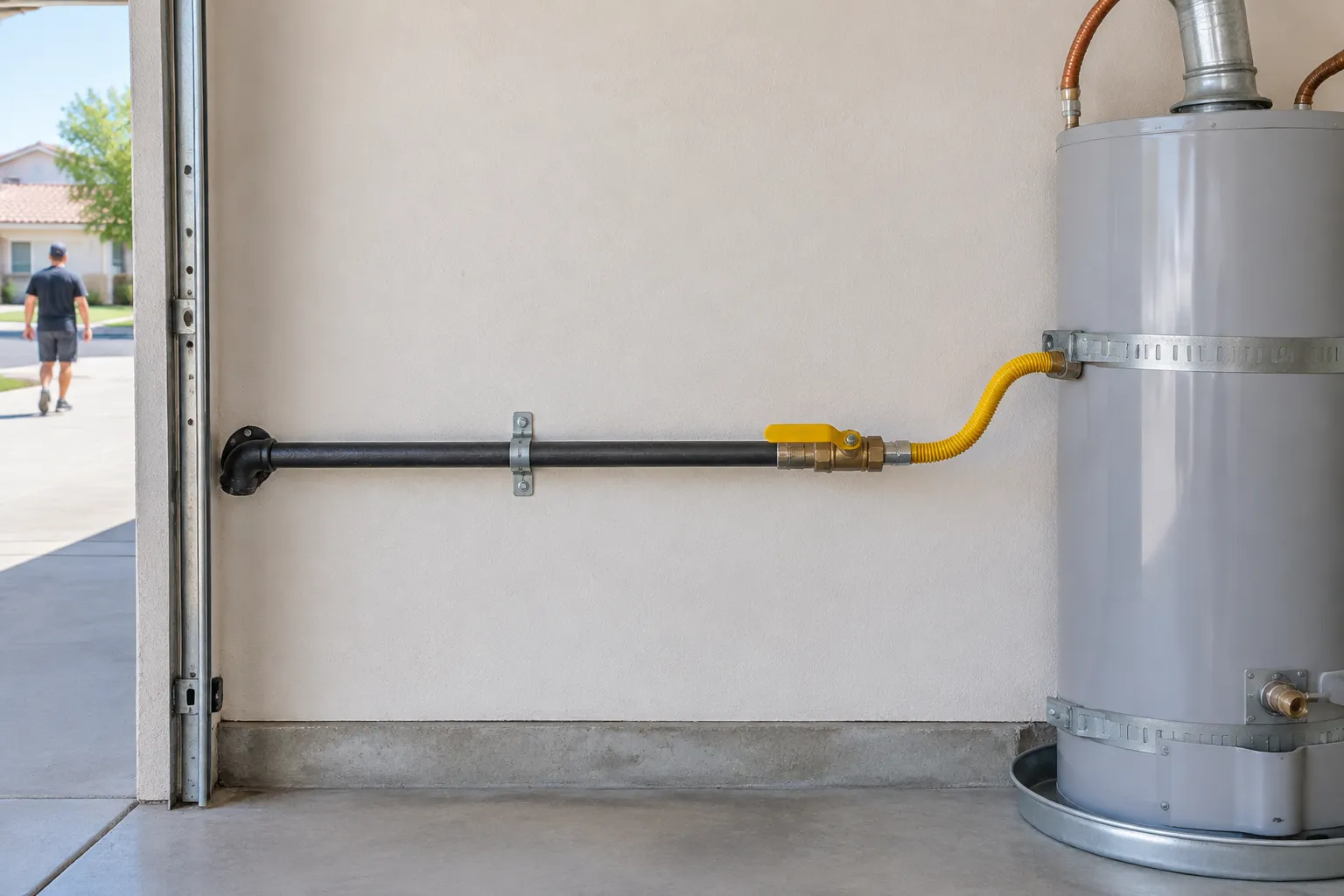
If you smell gas or hear it hissing, do not look for the leak. Leave the building, call 911 from outside, then call PG&E. After that, a plumber repairs the gas line: finds the leak, replaces the damaged pipe, fitting or connector, and tests the line before it is put back in service. Gas piping is not a DIY job. This page explains the process for homes in Stockton, and links to the emergency gas line repair guide if you are dealing with a leak right now. For other plumbing jobs, start from the Stockton plumbing hub.
What should you do first if you suspect a gas leak?
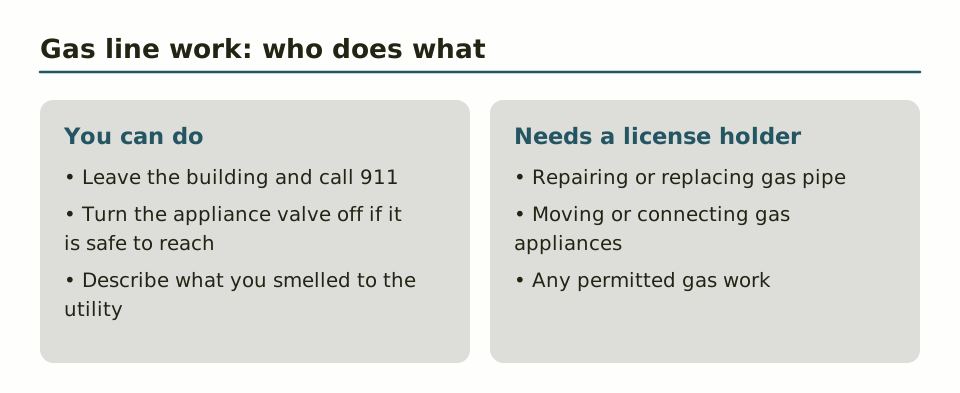
Leave the area immediately, call 911, then call PG&E. That is PG&E's own instruction for a suspected leak. Do it from outside, away from the house, and do not flip switches, start a car in the garage or use anything that could spark while you are inside. Do not go back in until you are told it is safe.
PG&E lists these signs of a possible leak:
- a rotten-egg or sulfur smell;
- hissing, whistling or roaring sounds;
- damaged connections to gas appliances;
- dying plants in damp areas near a gas line, or bubbling in wet soil.
Do not rely on smell alone. Some people cannot detect the odor, so a gas appliance that behaves oddly or a hissing sound is worth treating as a warning too. Only after the utility says the area is safe does a plumber step in. If a plumber is called first and finds a leak, the plumber also stops work and calls the utility.
What does a plumber do on a gas line repair?
A plumber shuts off the gas, finds the leak with a detector or a pressure test, repairs or replaces the faulty section and tests that the line holds before the gas is turned back on. Which pipe, fitting or connector is replaced depends on what failed and what the line is made of.
A typical visit runs like this:
- Confirm the problem and shut off the gas at the appliance, at the house shut-off, or at the meter.
- Locate the leak, by testing the line and checking joints, flex connectors, valves and appliance connections.
- Cut out and replace the damaged section, or replace the fitting or flex connector.
- Pressure-test the repaired line and check every joint for leaks.
- Where required, have the work inspected by the building department, then relight appliances.
Common causes include a worn flexible connector behind a stove or dryer, a corroded fitting, damage from digging, a loose joint on a fireplace or barbecue line, and old iron pipe that has corroded. Underground lines add digging, and lines under concrete add more.
Who is allowed to repair a gas line in California?
A plumbing contractor. California's contractor board describes the C-36 Plumbing Contractor classification as covering piping for gases, all gas appliances, flues and gas connections, water and gas piping from the property owner's side of the utility meter to the structure, and gas safety devices such as earthquake and control valves.
In practice: do not repair gas pipe yourself, and do not hire a handyman for it. The plumbing business that visits holds its own license, and this site only helps you get quotes. Look the contractor up at cslb.ca.gov before the work starts, and ask whether a permit will be pulled. Gas work usually involves a permit and an inspection through the local building department, so ask the plumber to explain how it works in Stockton.
The lines between the street and the meter are generally the utility's. If you smell gas outside near the meter or a gas main, treat it the same way: leave, call 911, call PG&E.
What affects the price of gas line repair?
Price follows how big the job is and how hard the line is to reach. A plumber quotes the real price after finding the leak. Treat anything you read as a guide only. These are the factors that move it:
- Where the leak is. A flex connector at an appliance is a small job. A leak in a buried or concealed line is not.
- Length and material of the pipe to be replaced, and whether new pipe has to run another route.
- Digging or opening walls, floors or concrete, and who repairs the finish afterward.
- Number of appliances to be shut off, tested and relit.
- Permit and inspection fees and timing.
- Time of day. An emergency call costs more than a booked visit.
The page on gas line repair costs covers ranges. If you are comparing several gas jobs, such as moving a range or adding a line for a water heater, ask each plumbing business for a written quote with the same scope. The gas-or-electric choice for a water heater is on electric vs gas water heaters.
Does homeowners insurance cover gas line repair?
It depends on your policy and on the cause. Some policies cover sudden damage and not wear. Others exclude the buried line to the house, or cover it only with an add-on. Read the policy, then call the insurer before work starts if you think a claim might apply, and keep the plumber's written findings and photos. This page cannot say what a given policy pays.
If you rent, tell the landlord at once. Piping and appliances at the property are usually the landlord's to arrange, but check your lease.
Is this page about fixing a car gas line?
No. This page covers natural gas and propane piping in a home. Fuel lines on a car or truck are a mechanic's job, not a plumber's. For fireplace, stove, dryer and barbecue lines at a house, the same rules apply as above: a plumbing contractor, a permit where required and a pressure test at the end. If a new water heater changes the gas piping, see water heater repair and tankless water heater installation, which may need a larger gas line than the appliance they replace.
When is an inspection worth having?
Ask for a check if you have an older house with iron gas pipe, if you have just bought a place and do not know the age of the piping, or if you are adding an appliance. A plumber can pressure-test the line and look at the connectors. See plumbing inspection cost for what an inspection involves and what moves the price.