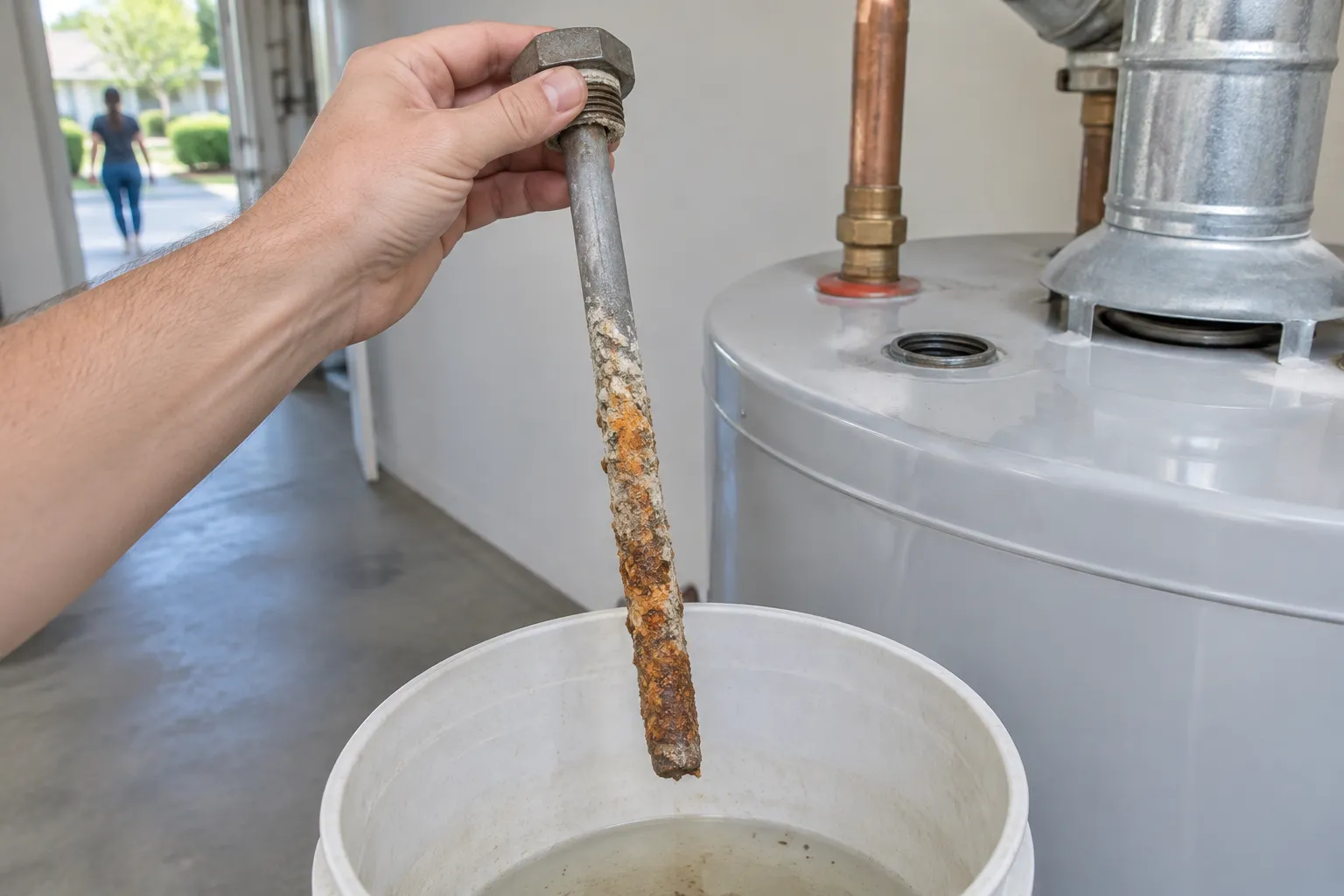
A plumber replacing a water heater anode rod typically charges about $200 to $300 in total, labor included, according to Bob Vila. The rod is only $20 to $50 of that, so most of the bill is the visit. A do-it-yourself swap runs about $30 to $90. Your local quote depends on access to the tank, the rod type and how stuck the old rod is.
If you are still working out whether the job is needed, start with water heater leaking and failing, which explains what the rod does and how to tell when it is spent. This page stays on price.
What does anode rod replacement cost?
Bob Vila puts a plumber-installed replacement at about $200 to $300. The rod itself is $20 to $50.
| Item | Typical range | Note |
|---|---|---|
| Anode rod, part only | $20 to $50 | Standard magnesium or aluminum rod |
| Plumber, rod and labor | $200 to $300 | Bob Vila |
| Do-it-yourself, rod and tools | $30 to $90 | You supply the labor |
Those numbers are national guides, not Stockton price lists. The plumbing business that visits quotes the real price.
How long does the work take and what does the plumber do?
Plan on roughly an hour: Bob Vila lists roughly 30 minutes of working time and 60 minutes in total for a do-it-yourself job. The plumber turns off power or gas, closes the cold water supply, drains a few gallons from the tank, removes the old rod, fits the new one and restores everything.
The step that costs time is breaking a rod loose that has not moved in years, and that is a common reason for a higher bill. Turning off power at the breaker for an electric heater is the first step, and the manufacturer's instructions on the tank label are the authority for your model.
What pushes the price up or down?
Four things move the price: whether you hire a plumber, the type of rod, the space above the tank and how stuck the old rod is. A tank in a cramped closet or garage corner can need a flexible rod, which costs more than a rigid one, and an old rod that will not turn can add labor time.
- Rod type. Magnesium rods are generally recommended, while very soft or low-pH water attacks them quickly, and aluminum may suit those conditions better.
- Clearance above the tank. Low ceilings or a tight closet can call for a flexible segmented rod.
- Rod age and condition. A rod that has seized in place takes longer to remove.
- Water quality. A guide from a rod manufacturer says hard water and water softeners can consume anodes faster, so you may inspect more often. Cal Water's Stockton report lists groundwater hardness at 22 to 290 ppm with an average of 150 ppm, and purchased surface water at about 39 ppm, so the right interval depends on what comes out of your tap.
- Bundled work. If the plumber is already there, ask whether flushing sediment from the tank can be done in the same visit, and note that a pressure relief valve replacement is a separate line.
How often does the rod need replacing, and what is the cost over time?
Guides give different intervals: Bob Vila says most owners need a replacement about once every 3 to 5 years, and a manufacturer's guide suggests inspecting every 2 to 3 years and notes rods typically last 2 to 5 years. Hard water or a softener can shorten that. Age, water quality and tank size all play a part.
Spread over a heater's life, even a $200 rod visit every few years is a small part of the cost of a new tank. The water heater cost page shows what replacement runs, and the flush water heater page covers sediment, which matters because buildup shortens a tank's life.
Is the anode rod the same as the heating element or thermostat?
No. The anode rod is a sacrificial metal rod that corrodes so the tank does not, while the heating element and thermostat control how the water is heated. The difference matters for cost: a heating element or thermostat replacement is a separate repair, and the temperature settings on the thermostat are a separate matter from the rod.
If your water is lukewarm, a heating element or thermostat is the likelier cause, not the anode rod. A plumber can check which part has failed before you pay for the wrong one. The water heater repair page covers the symptoms and when each part fails.
How to compare anode rod quotes
Ask what each quote includes: the rod type, whether the old rod is checked first, labor, drain and flush, and any disposal. A quote that spells out those lines is easier to compare than a single number.
A quote that does not name the rod type leaves a question open, since magnesium and aluminum rods suit different water, so ask. If the inspection shows the old rod still has plenty of material left, you may not need a replacement at all, and a good quote should say so. If the tank is already leaking from the bottom or sides, a new rod will not help, and the question becomes repair or replacement.