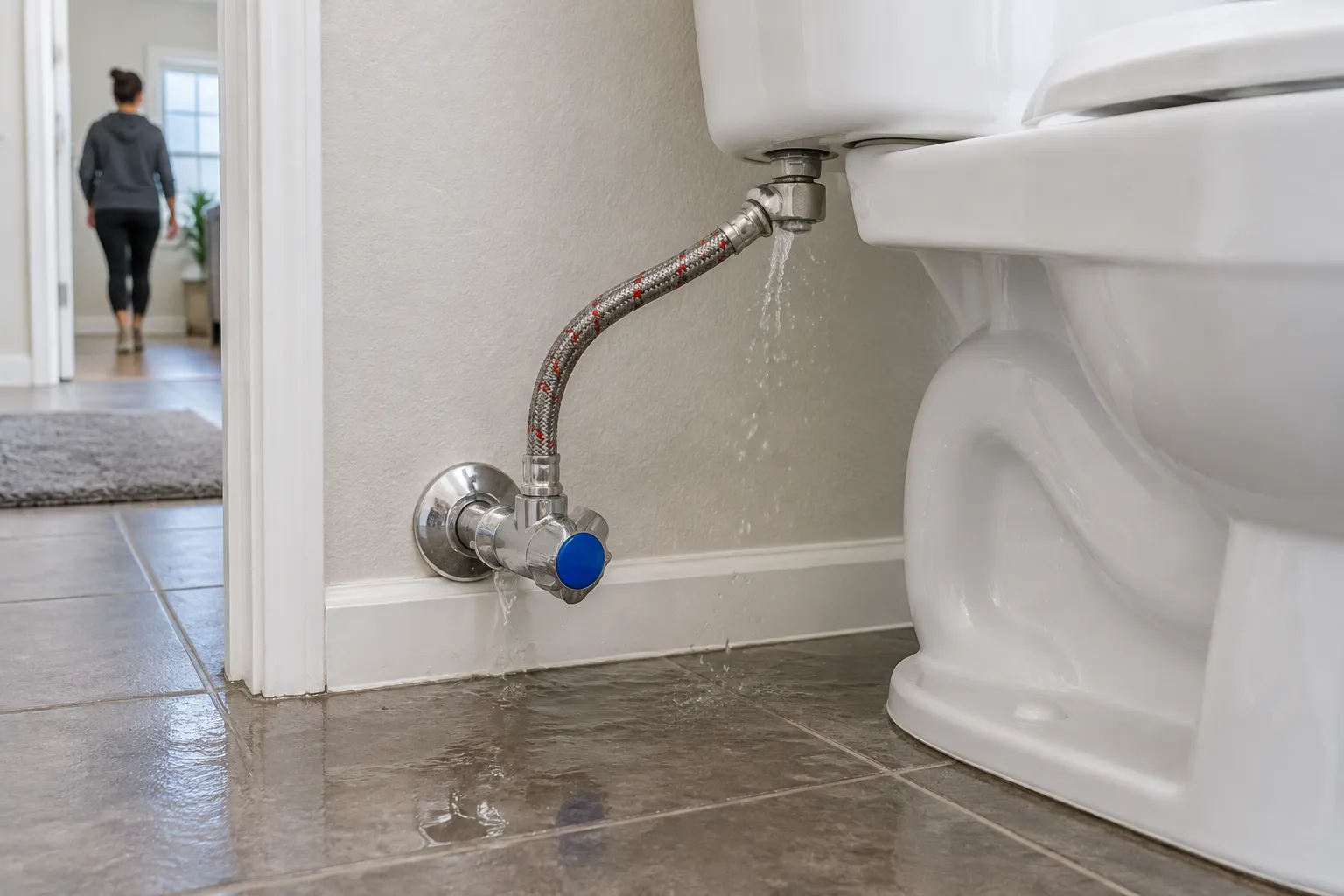
If water is spraying or pouring from the small pipe between the wall and your toilet, turn the small valve on the wall under it clockwise until it stops. That valve is the angle stop. If it will not close, shut off the water to the whole house at the main valve. Then call a plumber, because the supply line, and sometimes the valve, needs replacing. This page covers the steps, the repair and what changes the price. It sits under toilet repair and replacement, where the other toilet problems are covered.
What do you do the moment a toilet supply line bursts?
Close the angle stop on the wall behind the toilet, turning it clockwise. If it is stuck or leaks, close the main water valve for the house instead. Then stop the water from spreading: towels and a bucket, and stay out of standing water near outlets. Ready.gov's advice is not to touch electrical equipment if it is wet or if you are standing in water.
In order:
- Shut off the water at the angle stop, or the main valve if the stop does not work.
- Keep clear of electricity. If water reaches outlets or lights, switch off power at the breaker only if you can reach it without standing in water. If you cannot, leave it and call the plumber and your electric utility.
- Stop the flood. Mop and towel the floor, and move rugs and anything that wicks water.
- Check nearby walls and the ceiling below for water that has traveled.
- Photograph the damage for insurance, and keep the broken line, because it shows which part failed.
- Call a plumber. If the water will not stop, ask for an emergency visit, see plumber emergency.
Why does a toilet supply line burst?
Most supply lines that fail are braided flexible hoses or old plastic or chrome-plated lines that wear at the connector. Age, mineral buildup, a nut tightened too far or a hose kinked behind the tank are the usual causes. Water hammer or high water pressure can also stress the line.
Common signs before a full burst:
- damp or rusty stains at the connection to the valve or the tank;
- water pooling on the floor around the base of the toilet;
- a bulge, kink or frayed braid on the hose;
- a corroded valve that drips when you touch it.
Because the line has failed once, the angle stop it hangs on has often been under strain too. A plumber will normally check the valve while there.
What does a plumber replace after a burst supply line?
The plumber replaces the supply line, and often the angle stop, then checks the fill valve, the connection to the tank and the floor and wall for water damage. The toilet is flushed to confirm there is no leak at the new connection. A leak from the base can be something else, a failed wax ring, which is a different repair.
A typical visit:
- Confirm the water is off, then cut out or unscrew the failed line.
- Check the angle stop and replace it if it is corroded or will not seal.
- Fit a new supply line matched to the valve and the tank connection.
- Turn the water on slowly and check every joint, the tank and the base.
- Flush the toilet several times and watch for drips.
If the water has run into the floor, the plumber can tell you where the damage stops and what a restoration company or a flooring contractor would need to do. Extra repairs after the supply line are usually separate jobs. See fill valve repair or toilet inlet valve repair if the valve inside the tank is also failing.
Can you replace a toilet supply line yourself?
Often, yes, if the angle stop shuts off cleanly. A new supply line is a common home repair: close the stop, drain the tank, unscrew the old line, fit the new one and tighten as the product instructions say. Do not overtighten, since that is a common cause of the next failure.
Call a plumber instead when:
- the angle stop will not turn or still leaks when closed;
- the pipe in the wall is corroded or the stop is stuck to the pipe;
- water has already damaged the floor or run to the room below;
- you rent, and the landlord has to arrange the repair;
- you are not sure which supply line fits.
If the toilet also runs on or the tank keeps refilling, it may have a different fault, covered in how to repair a running toilet. EPA WaterSense gives a simple test: put a few drops of food coloring in the tank, wait 10 minutes, and if color shows in the bowl, the toilet is leaking inside. It also notes that a worn flapper can silently leak thousands of gallons a year.
What affects the price of a supply line repair?
Plumbing technicians generally treat a burst supply line as one of the smaller jobs, but the total depends on what else turns up. The plumber quotes the real price after seeing it. These are the factors:
- Valve condition. A seized or corroded angle stop adds a part and time.
- Pipe in the wall. Old threaded fittings can be hard to remove.
- Emergency timing. After-hours visits carry a premium, see emergency plumber cost.
- Water damage. Drying out and repairing flooring or drywall is a separate cost.
- Other work at the same time. A new toilet, wax ring or fill valve in the same visit changes the quote. See handyman or plumber for a toilet install.
Ask the plumbing business for the price in writing before work starts. If the repair is above $500 in labor and materials, California's contractor board says the job needs a written contract, and the down payment should not exceed 10 percent or $1,000, whichever is less. Check the contractor at cslb.ca.gov.