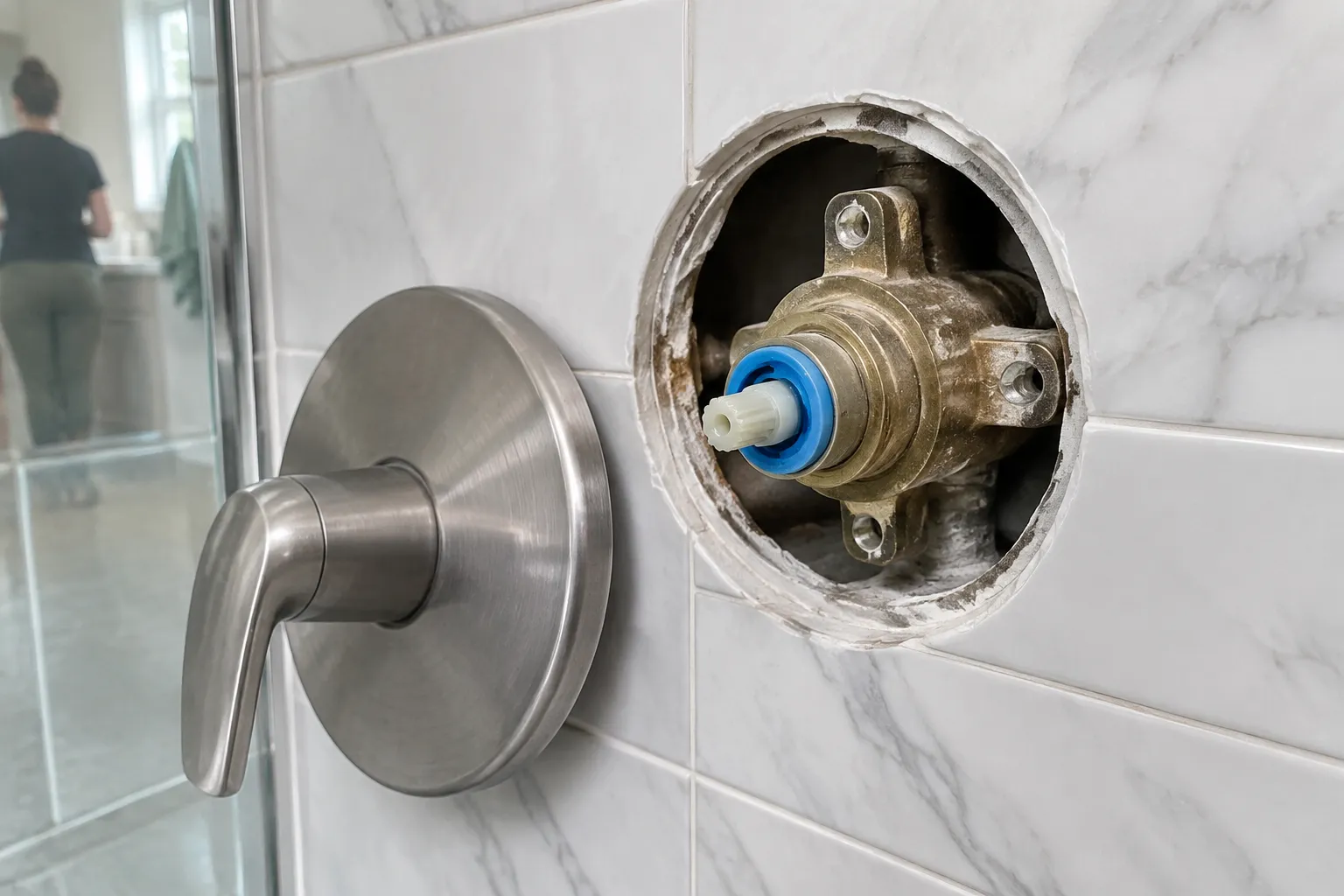
A plumber can fix most shower problems in one visit: a dripping spout, a worn valve cartridge, a diverter that will not switch, a leaking shower pipe or a drain that backs up. The cause decides the price, and the quickest way to learn the cause is to look at where the water shows up. This page covers the usual faults, what a repair involves, and when a leak behind the wall needs a plumber rather than a weekend. Start from the Stockton plumbing hub for other jobs, or ask for quotes from local plumbing businesses at the bottom of this page.
What does a plumber do when a shower is leaking or dripping?
A plumber finds where the water is coming from, shuts it off, then repairs or replaces the worn part. For a dripping showerhead or tub spout that is often a cartridge, washer or valve seat. For a stain on the ceiling below or a wet wall, the plumber checks the supply pipes and the drain connection before opening anything.
Most shower repairs follow the same order:
- Shut off the water to the shower, or to the whole house if there are no stops.
- Remove the handle and trim to reach the valve body.
- Swap the cartridge, seats or stem for a matching part.
- Run the shower hot and cold, and check the spout, the diverter and the drain.
If the valve body itself is corroded, or the pipes behind a tiled wall are leaking, the job grows. The plumber may need to open the wall from the back or cut through tile. That is the main reason two "shower leak" quotes can look so different.
Which shower problem do you have?
Match the symptom to the likely cause before you call. It helps you describe the job and helps the plumbing business plan the right parts.
| What you see | Likely cause | Who usually fixes it |
|---|---|---|
| Drip from the spout or showerhead after you turn it off | Worn cartridge, washer or valve seat | DIY or plumber |
| Handle is stiff, loose, or water temperature swings | Failing cartridge or mixing valve | Plumber |
| Water comes out of the tub spout while the shower runs | Diverter wearing out | DIY or plumber |
| Weak flow from the showerhead only | Mineral buildup in the head | DIY |
| Weak flow from every fixture | Supply or pressure problem | Plumber, see low water pressure |
| Stain or drip on a ceiling below, or a damp wall next to the shower | Leak in a supply pipe, drain or pan | Plumber |
| Water pools or drains slowly | Clog in the trap or line | See shower clogged drain |
A drip is more than a nuisance. EPA WaterSense says a showerhead dripping 10 times a minute wastes more than 500 gallons a year, and that average household leaks can waste over 9,300 gallons a year.
What affects the price of a shower repair?
The price depends mostly on access and on whether the valve or the pipes are the problem. A guide to local plumbers' pricing is only a guide: the plumber quotes the real price after seeing the shower. These are the things that move it.
- Which part fails. A cartridge swap is a smaller job than replacing a whole valve body.
- Access. A shower with a panel behind it in a closet or hallway is quicker to reach than a tiled alcove.
- Valve brand and age. Older or discontinued valves can mean hunting for a part or replacing the valve.
- What is behind the wall. Leaks in the pipes mean opening the wall, then patching drywall or tile, which may be a separate trade.
- Time of the call. After-hours visits cost more, see emergency plumber cost.
For the wider picture of fixture pricing, read plumbing cost per fixture. This page gives no single number because the spread between a drip and a wall leak is too wide to be useful.
Can you fix a leaking shower yourself?
Yes, for the simple faults: a dripping faucet or showerhead, a worn washer, or a clogged showerhead with mineral buildup. Turn the water off at the stops first, take a photo before you take anything apart, and bring the old cartridge to the hardware store to match it. The guide on repairing a leaking faucet walks through the common steps.
Call a plumber when:
- the leak is inside a wall or ceiling, or you cannot see where it starts;
- the valve is corroded and the handle will not turn;
- you have no shut-off valve for the bathroom;
- the repair needs a permit, or you rent and the landlord must arrange it.
If water reaches outlets, light fixtures or a ceiling fan, keep away from them. Ready.gov's advice is not to touch electrical equipment if it is wet or if you are standing in water, and to shut off power only if you can do it safely. If you cannot reach the breaker without stepping into water, leave it and call the plumber and your electric utility.
What about a new shower in a remodel or new build?
New shower plumbing is set at the rough-in stage, before the walls close: the valve height, the supply lines and the drain position are fixed then. Changing them later means opening the wall again. Work like this normally needs a building permit and inspection, so ask the plumbing business to confirm what applies in Stockton and who pulls it.
When you get quotes, give each plumbing business the same list: the number of showerheads or body sprays, the valve type you want, whether the drain moves, and who supplies the fixtures. Quotes that start from the same list are easy to compare. Adding fixtures is priced the same way, and a burst line in the cabinet next door is a different job, see pipe burst under a sink.
How do you pick a plumber for a shower job?
Check the contractor, then the paperwork. California's contractor board lets you look up a license at cslb.ca.gov before you agree to anything. This site is a quote service, and the plumbing business that visits holds its own license, so do the check yourself.
CSLB says a home improvement job over $500 in labor and materials needs a written contract, that the down payment should never exceed 10 percent of the price or $1,000, whichever is less, and that you can cancel within three business days of signing (five if you are 65 or older), with written notice. Ask the plumbing business to explain them in writing. For a repair, ask for the price in writing, what is included, and whether a wall repair is part of it.