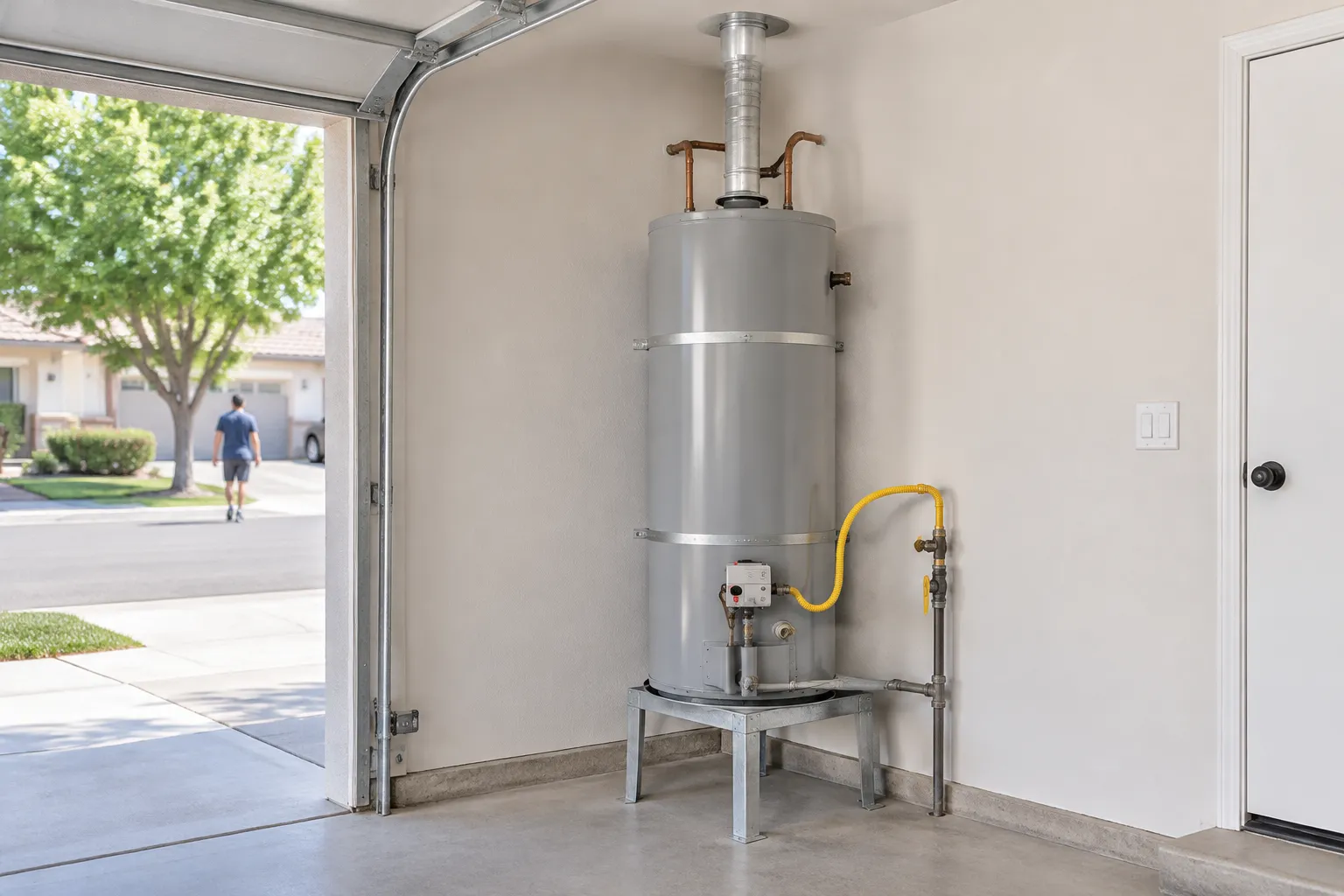
A 40 gallon gas water heater is a storage tank that holds 40 gallons of water and heats it with a gas burner under the tank. People often choose it for a small or mid-sized household, but the right size depends on how many showers, dishwasher cycles and laundry loads overlap in your home at the same time. If you are comparing it with other options, start with the guide to water heater repair and replacement, then use this page to learn what a gas tank needs, what to check before a swap, and when the job belongs to a plumbing business and not to you.
What is a 40 gallon gas water heater, and who is it for?
It is a tank-style heater: 40 gallons of stored hot water, a gas burner below, a flue that carries exhaust out of the house, a gas control valve with a thermostat, and a temperature and pressure relief valve for safety. Households with two to four people often land on this size, though your habits matter more than the head count.
The number on the label is storage, not output. Two 40 gallon heaters can behave very differently when three people shower back to back, because gas models heat the stored water at a rate set by the burner. The yellow energy label on many tanks lists a first hour rating, which tells you roughly how much hot water the heater can deliver in a busy hour. If your current heater runs out of hot water, ask the plumber to compare the first hour rating of your tank with the one you are considering, and not just the gallon size.
Before you pay for a bigger tank, check the simple things. A thermostat set too low, a dip tube that has failed, or a heavy layer of sediment can all make a good tank act undersized.
How is a gas tank different from a 40 gallon electric one?
A gas heater burns fuel and needs a gas line, a way to bring in air for combustion, and a vent to carry exhaust outside. An electric tank uses heating elements and a dedicated circuit, and has no flue. That changes where it can go, what a replacement involves, and who must do the work.
Gas heaters often heat water faster once the burner is running, which is why many households with gas service pick them when the line is already in the house. Electric tanks can be easier to place because there is no exhaust, but they depend on your electrical panel having room for the circuit. If you are weighing both, read electric water heater 40 gallon for the electric side, and water heater electric vs gas for the running-cost and install trade-offs. Tankless units are a different category again, covered in tank vs tankless water heater.
A like-for-like swap is the simplest job. Switching from gas to electric, or the other way, is a bigger one, because a new circuit or a new gas line and vent may be involved.
What should you check before replacing a gas water heater?
Check five things: the age and condition of the old tank, whether the new unit will fit the same space and vent, the gas connection, the earthquake bracing, and the thermostat setting. A plumbing business that visits should look at all five. Knowing them first helps you compare quotes properly.
Age and condition. The rating plate on the side of the tank carries a serial number, and most makers encode the manufacture date in it. If you cannot read it, the plumber can. Rust at the base, water on the floor or a tank that rumbles often point to a tank near the end of its life. The page on water heater leaking hot water covers what leaks mean.
Space and venting. A 40 gallon gas tank has a flue that must rise and connect properly. A cramped closet or a garage corner with stored items nearby makes the job harder.
Gas connection. This is regulated work. California requires a licensed contractor when a project needs a building permit, uses additional workers, or costs $1,000 or more in labor and materials. A replacement that includes gas fittings usually reaches that line quickly. The plumbing business that visits holds its own license, and you can check any contractor at the Contractors State License Board site, cslb.ca.gov.
Earthquake bracing. California law requires new and replacement water heaters to be braced, anchored or strapped against falling or sliding in an earthquake, following the California Plumbing Code. Ask that the quote includes it.
Temperature. The US Department of Energy's Building America site, citing the EPA, recommends setting water heaters at 120 degrees Fahrenheit to prevent scalding, and notes that every 10 degrees lower saves about 5 percent in energy use. Ask for the new unit to be set at that level unless someone in the house has a medical reason for hotter water.
What should you do if you smell gas or the pilot will not stay lit?
If you smell gas, leave the building, move upwind, and call 911, then call PG&E at 1-800-743-5000. Do not use a phone, light switch, flashlight or match inside until you are a safe distance away. PG&E describes the smell as sulfur-like or like rotten eggs, and warns not to rely on smell alone.
Other signs PG&E lists are a hissing, whistling or roaring sound from a gas appliance or line. If you have found a gas smell near the water heater, do not try to relight it or look for the source yourself. Page emergency gas line repair explains what happens after the first emergency call.
A pilot light that goes out is a different situation, with no smell. Many heaters have a relight procedure printed on the label, and you can follow it if you are comfortable. PG&E says that if you cannot relight a pilot light yourself, call PG&E or another qualified professional. If the pilot keeps going out, the thermocouple, the gas control valve or the draft may be at fault, and that is a visit for a plumbing business. The work on gas piping itself is covered in plumber gas line repair.
How do you compare quotes for a gas replacement?
Ask each business to write down the same things, so the totals are comparable: tank size and brand, the first hour rating, the venting work, the gas fittings, the bracing, haul-away of the old tank, the permit if one is needed, and the warranty terms printed by the manufacturer. A quote that lists only a total is hard to compare.
Prices vary by tank brand, how easy the space is, whether the vent or gas line needs changes, and permit fees. The guide to water heater cost explains what moves the figure. The plumber quotes the real price after seeing your home, so treat any number you read online as a guide. Ask whether the quote is a fixed price or an estimate, and what would change it on the day.
When should you call a plumber business?
Call one for any gas connection, a tank that leaks from the body, a relief valve that keeps discharging, or a pilot that keeps failing. These are not jobs to learn on, because mistakes involve gas, exhaust or scalding water.
You can do some things yourself: check that the thermostat is set where you want it, look at the floor for dampness, and note the model and serial number. If you are in doubt, shut the gas supply valve to the heater, which is usually a handle on the pipe above it, and call.