A plumbing emergency is any problem that is damaging your home, threatening your safety or leaving you without water or a working toilet and cannot wait for the next business day. Examples are a burst pipe, a sewage backup, a gas smell, a water heater leaking steadily or no water at all. In most of these cases you can limit the damage yourself first by shutting off the right valve, then ask local plumbing businesses for quotes. Send a request on the quote page and describe what is happening. For other plumbing jobs, start at the Stockton plumbing home page.
What qualifies as a plumbing emergency?
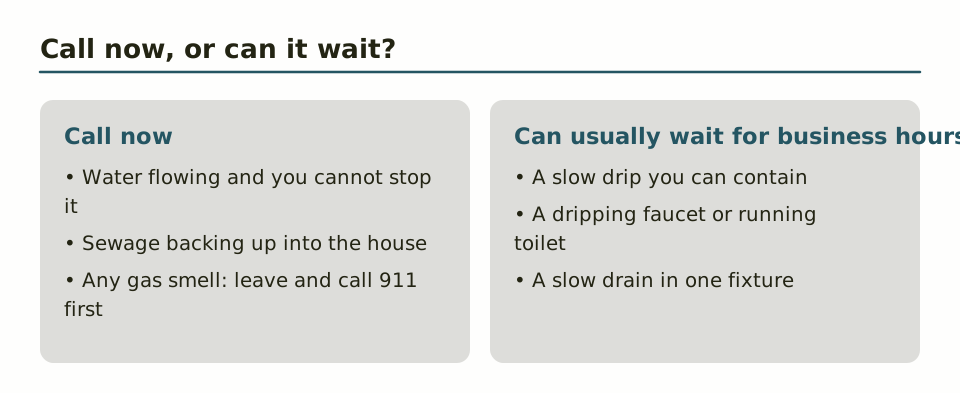
An emergency is water you cannot stop, sewage coming back into the home, a smell of gas, no running water, or a water heater that is flooding or too hot. A slow drip, a single clogged sink or a running toilet is not usually an emergency, because you can shut off a valve and wait for a regular appointment, which costs less.
Quick sort:
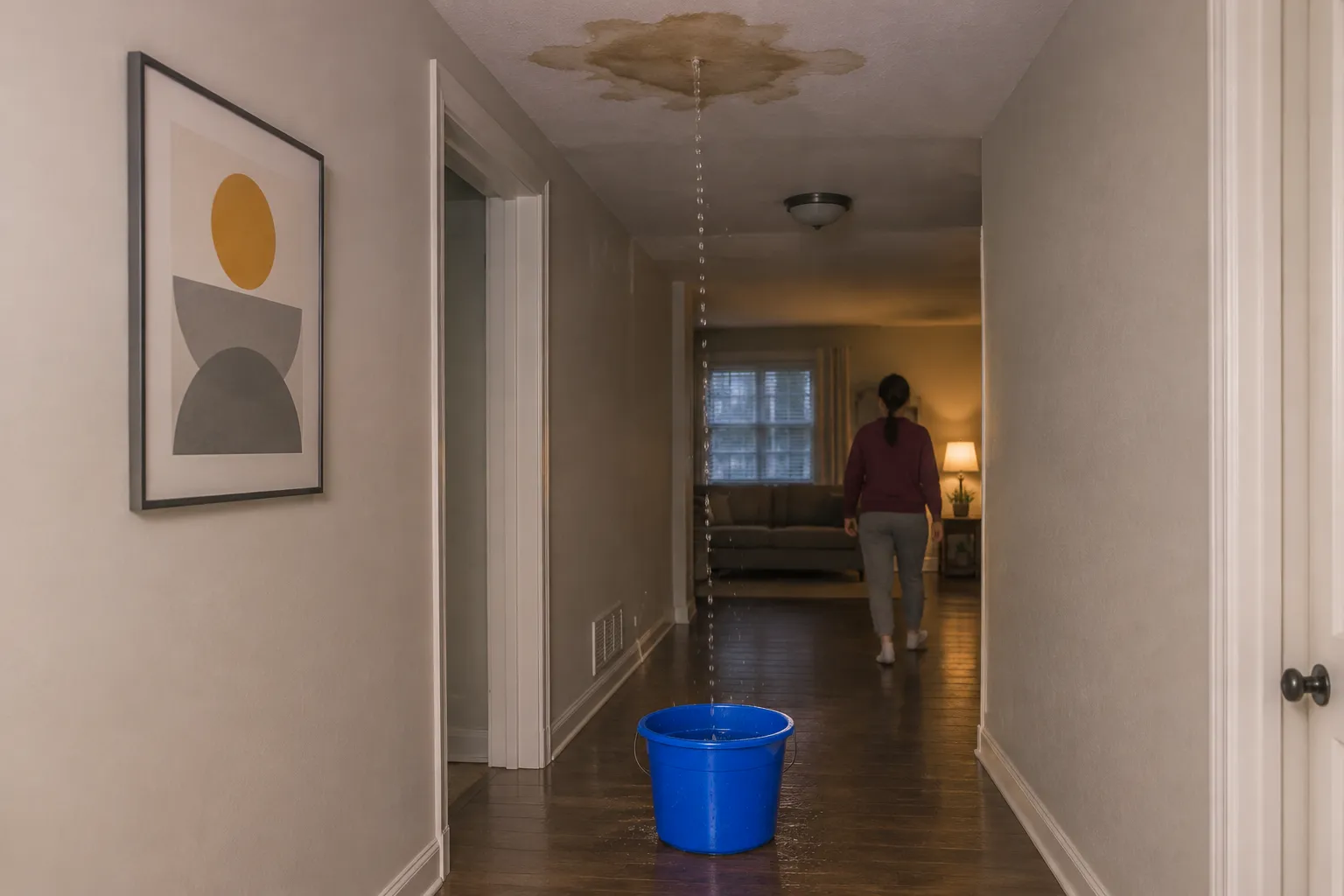
- Call now: a burst or split pipe, water pouring from a ceiling, sewage backing up in a tub or floor drain, a gas smell, a water heater leaking steadily.
- Call today: a toilet that will not stop overflowing after you close its supply valve, no hot water in winter, a leak under a sink that a bucket is catching.
- Can wait for regular hours: a dripping faucet, a slow drain, a running toilet, a one-fixture clog, low pressure in one tap.
A gas smell is different from every item above. Leave the house, do not use switches or phones inside, and call 911 and your gas utility from outside. Do not call a plumber from inside the home. Carbon monoxide alarm going off: get everyone outside and call 911, as the U.S. Consumer Product Safety Commission advises.
What should you do while you wait for a plumber?
Stop the water, protect what you can and document the damage. Find the main shutoff valve and close it, or the fixture's own valve under a sink or behind a toilet. Turn off the water heater's power or gas if it is involved, move valuables, mop up, and photograph everything for your insurer.
Specific moves:
- Burst pipe: shut off the main, open a low tap to drain the line. See burst pipe repair.
- Overflowing toilet: close the valve behind the toilet, lift the tank lid and lift the float or close the flapper. Details on clogged toilets.
- Water heater flooding: close the cold inlet valve on the heater and turn off its power or gas. See emergency water heater repair.
- Sewage backup: stop using water in the house, keep children and pets out, and avoid contact with the water.
- Wet electrical areas: turn off power at the breaker only if the panel is dry and reachable. If not, leave and call the utility or 911.
Insurance can matter here. Policies differ, but the California Department of Insurance describes sudden and accidental water damage as typically covered and slow seepage as typically not, so stopping the water early and keeping photos helps any claim.
What are the different types of plumbers, and which one handles an emergency?
A general residential plumber covers most emergencies: leaks, backups, water heaters and fixtures. Some businesses specialize in drain and sewer work, gas piping or commercial systems. For a home emergency, ask for a residential plumber who does emergency work, and describe the problem so the business can say whether they handle it. See types of plumbers for the differences.
Before anyone arrives, ask that the business confirm its California contractor license number. You can check the license, classification and complaints on the CSLB website. Plumbing is classification C-36.
What is a normal call-out fee for a plumber?
A guide, not a quote: published national figures say after-hours work often costs time-and-a-half to triple the standard rate, or a flat fee of $100 to $350 on top of the hourly rate. Another guide gives $150 an hour as the standard emergency rate and a flat emergency call-out fee of $200 to $300.
| Charge | Typical range |
|---|---|
| After-hours flat fee on top of the hourly rate | $100 to $350 |
| Flat emergency call-out fee (another guide) | $200 to $300 |
| Emergency hourly rate (standard) | $150 |
| Evening, weekend or holiday premium | time-and-a-half to triple the standard rate |
The plumber quotes the real price. What moves it: the time of day, how many hours the job takes, parts, and how hard the problem is to reach. Some businesses charge a high trip fee but normal labor, and others do the opposite, so ask for both numbers. For the full breakdown see emergency plumber cost.
How do you get an emergency plumber in Stockton?
Two routes work: call local plumbing businesses directly and ask whether they handle emergency calls now, or send one request here and let businesses reply with quotes. This site does not dispatch plumbers, and nobody here can promise an arrival time, so ask each business directly when it can come and what it charges.
When you reach a business, say where the water is coming from, whether the main is off, and whether anything electrical is wet. Ask for the trip fee, hourly rate and minimum in writing before work starts. For more on finding a plumber at odd hours, see 24 hour plumber and emergency service plumber.
Watch for businesses that quote a very low price on the phone and a much higher one on site. A written estimate with a stated scope helps you avoid that.