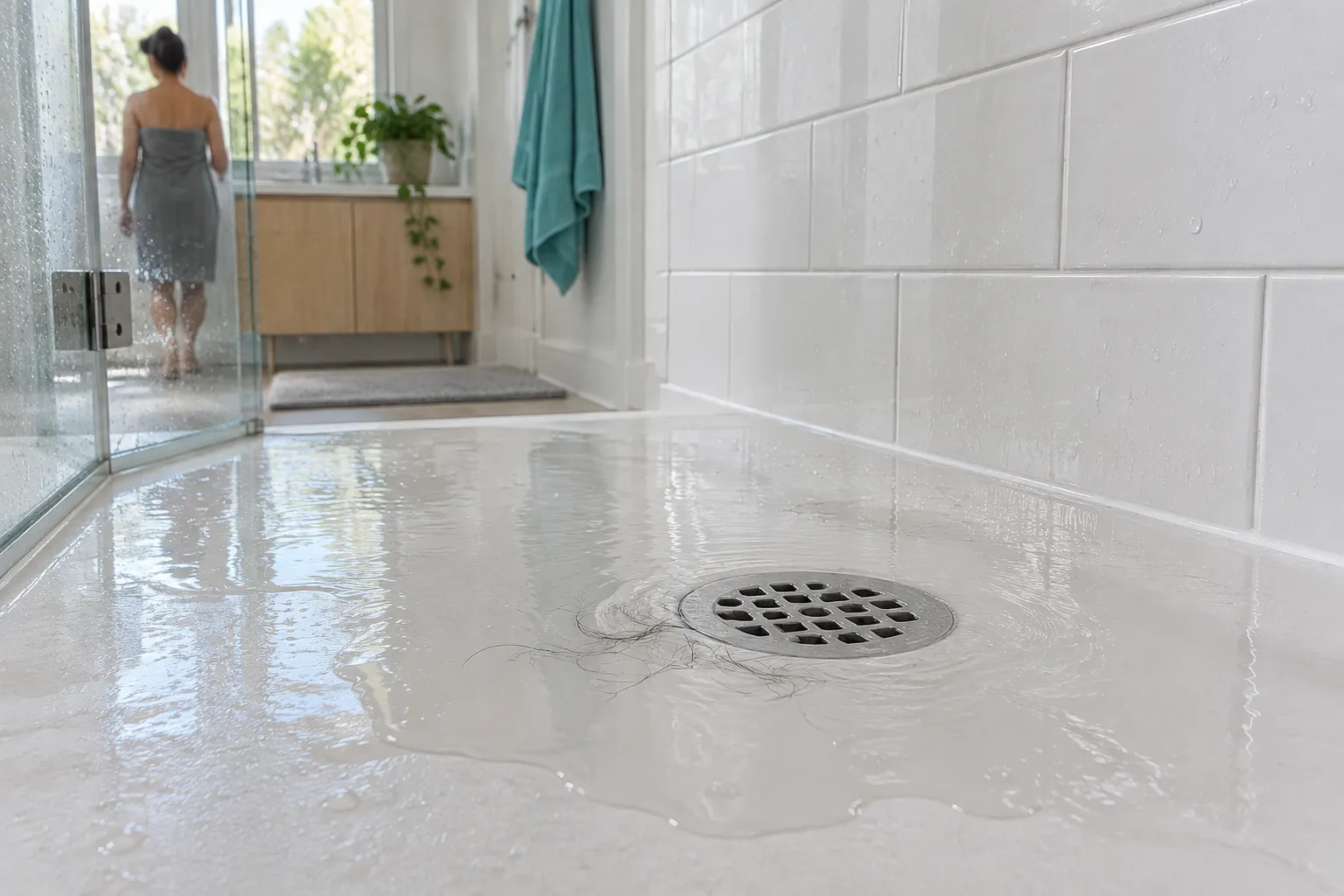
A clogged shower drain is usually a mat of hair, soap scum and skin oils sitting in the first few inches of pipe under the drain cover. Pull the cover, lift out what you can with a plastic drain tool or a bent wire, flush with hot tap water and test. If water still pools around your feet, the clog is deeper. This page is part of the drain cleaning and clogs guide. It shows the order of steps, what to avoid and when to ask a local plumbing business for a quote.
How do I unclog a shower drain myself?
Start with the cheapest steps: remove the drain cover, pull out hair and debris by hand or with a plastic barbed strip, then run hot tap water for a minute. If the water still drains slowly, use a plunger with a firm seal, or a small drain snake (also called a drain auger) to reach farther into the pipe.
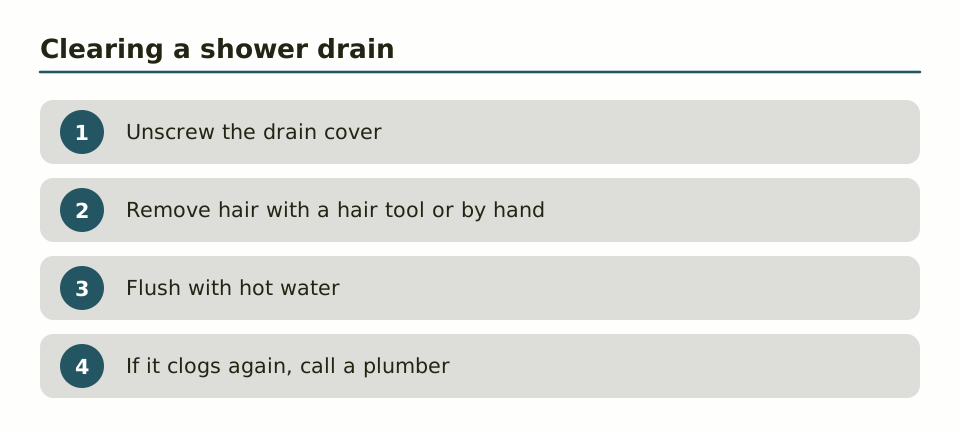
Step by step:
- Put on rubber gloves and unscrew or lift the drain cover. Many covers have one center screw.
- Remove hair and slime by hand, with needle-nose pliers or with a plastic barbed drain strip.
- Run hot tap water. If it clears, finish by cleaning the cover and running water for a minute.
- If standing water remains, put a plunger over the drain with enough water to cover the rubber cup. Plunge with a steady up-and-down motion for 20 seconds.
- Push a drain snake in, turn the handle and pull it back to bring out the clog. Repeat if needed.
- Run water and check that it empties fast.
A tub-and-shower combination has an overflow plate that can also hold a clog. For tubs, see how to drain a clogged bathtub.
Why does my shower drain keep clogging?
Hair and soap are the usual cause, but a drain that keeps blocking points to something else: a rough or damaged pipe that catches debris, a flat-sloped pipe that does not carry water away fast, a trap that is partly blocked by a build-up deeper in the line, or a vent problem that slows the flow. Frequent returns are a sign to get it looked at.
Check three things. First, how many fixtures are slow. If only the shower is, the problem is local to that branch. If the tub, a sink or a toilet nearby also drains slowly or gurgles, the blockage may be in a shared line. Second, listen for gurgling when another fixture is used. Third, smell the drain. A sewer smell can mean a dry trap, a vent fault or a sewage issue, which the sewer smell page covers.
A hair catcher in the drain stops most hair from going down in the first place. Pull and clean it after each week of showers.
Are drain cleaner liquids safe to use in a shower?
Chemical drain cleaners can clear some clogs, but they are strong products. Their labels warn about skin and eye burns, fumes and mixing with other products. Standing cleaner in a shower also splashes back if you try to plunge or snake afterward. Read the label, keep the room ventilated and never mix one product with another.
If you use a liquid, choose one that states it is safe for your pipe material, such as PVC or metal, and follow the dwell time exactly. Do not use a chemical cleaner and then call someone to snake the drain without telling them. A plumber who finds caustic liquid in the drain must handle it with care. An enzyme or bacteria-based cleaner is gentler on pipes but works slowly, and it is better for upkeep than for a full blockage.
Baking soda and vinegar may loosen a light film, but they do not reliably dissolve a hair clog, so do not count on them for a serious blockage.
What is hydro jetting, and is it safe for old pipes?
Hydro jetting is the use of a high-pressure water stream, delivered through a flexible hose and nozzle, to scour the inside of a drain line. It can remove grease, scale, silt and roots that a snake only punches through. It is usually used on main and branch lines, not for a simple shower hair clog.
Whether it is safe for older pipes depends on the condition of the pipe, not just its age. Cracked, collapsed or heavily corroded pipe can be damaged by high pressure. A sensible plumber looks at the line with a camera first, picks a pressure and nozzle to suit the pipe material, and tells you if jetting is not advisable. Ask about this before agreeing. You can see more about nozzle types and pipe materials on the hydro jetting nozzle types page and prices on the hydro jetting cost page.
Can I rent or buy a hydro jetting machine?
Rental shops and online retailers do offer jetting equipment, from small portable units to truck-mounted ones, but it is a poor fit for a shower clog. Used wrongly, the hose can kick back, the pressure can damage a fragile pipe, and the dislodged material can end up in a bend farther down. A drain snake is the right DIY tool.
A portable machine can make sense for a business that cleans drains every day, not for a household. If you have a recurring blockage in the main line, a camera inspection and a plumber's quote are a better use of money than renting equipment. If you want a before-and-after comparison, ask for the camera video of the line before cleaning and again afterward. Seeing clean pipe walls is the proof the job worked. If you are weighing companies, drain cleaning companies explains what to ask.
When should I call a plumber for a shower clog?
Call a local plumbing business when the drain stays blocked after a snake and a plunger, when more than one fixture is slow or gurgling, when sewage or a bad smell comes up, or when a clog keeps coming back. Water backing up into the shower from the toilet is an emergency.
Bring information to the quote: how long it has been slow, whether other drains are affected, any products you used and the age of the house. California requires a licensed plumber (CSLB C-36) for permitted work, and for any contracting job worth $1,000 or more in labor and materials. A simple clog clearing normally falls below that, but you can still check a business at cslb.ca.gov before you let them in. This site is a quote service, and the plumbing business that visits holds its own license. If the plumber finds a damaged or collapsed sewer line, the sewer line repair page explains what happens next.